Privileged IAM for IT
IT Privileged Access for Admins and DevOps: secure access to critical systems without shared credentials
Administrative and DevOps access is powerful by design, which makes it a prime target. When privileged access relies on shared passwords, static accounts, and manual approvals, risk increases and investigations become difficult because accountability is weak.
Modern Privileged Access Management reduces that risk by controlling how privileged access is granted, time-bounding access when needed, and creating audit-ready visibility into privileged activity. We help you establish secure privileged access that supports operational speed while enforcing least privilege and strong traceability.
Want to reduce privileged risk while keeping operations fast?
Prefer to describe your scope first? Submit the following request and we will come back with next steps Tell us about your needs.

How We Help
Privileged access succeeds when security improves without slowing down administrators and DevOps teams. We help you define the right privileged access model, reduce reliance on shared credentials, and apply controls such as approvals, just-in-time access, and session oversight. The focus is practical: protect critical systems, keep operations fast, and make privileged activity fully traceable.
Privileged access often grows organically across servers, directories, databases, cloud consoles, and tooling. We help you clarify scope and priorities, define privileged roles and access journeys, and translate them into a phased roadmap that reduces risk quickly while supporting operations.
Typical deliverables:
Current-state review of privileged accounts, access paths, and high-risk systems
Scope and prioritization (critical systems, admin groups, access scenarios)
Target operating model and ownership (who approves, who manages, who audits)
Phased rollout roadmap with quick wins and scale plan
We implement PAM controls that fit your environment and integrate with your identity platform. This includes credential vaulting and rotation where required, approvals and time-bound access, and integration with directories, MFA, and admin tooling.
Typical deliverables:
Target architecture and deployment design (on-prem/hybrid, HA where required)
Integration design (identity provider/AD, MFA, ticketing if applicable)
Credential vaulting and rotation approach (human and service accounts as in scope)
Onboarding plan for priority systems and privileged roles
Privileged access must be transparent and defensible. We enable session oversight and audit evidence, define operational processes, and prepare your teams to run PAM sustainably, including monitoring, reporting, and continuous improvement.
Typical deliverables:
Session control and oversight model (who can access what, when, and how)
Audit and reporting setup (activity visibility, evidence, investigations support)
Operational readiness (runbooks, monitoring, admin enablement, support model)
Post go-live stabilization and optimization plan
If you already know your scope and needs, send an inquiry and we will respond with next steps. If you prefer to talk first, book a short discovery call.

Privileged Access Outcomes You Can Measure
Privileged access should reduce risk without slowing down operations. With the right PAM approach, you can eliminate risky credential practices, enforce least privilege, and gain clear visibility into privileged activity across critical systems.
- Reduced credential risk by removing shared admin passwords and enforcing controlled access
- Faster, safer admin operations with time-bound access and clear approvals where needed
- Stronger protection for critical systems through least privilege and policy-based controls
- Audit-ready traceability with privileged session visibility and reliable reporting
- Lower incident impact by limiting standing privilege and improving investigation capability
Explore the outcomes we deliver through a structured privileged access approach.
Read more …
Privileged IAM for IT
What Privileged IAM for IT Delivers
- Privileged Account and Access Discovery
- Just-in-Time Privileged Access and Approvals
- Privileged Session Monitoring and Recording
- Credential Vaulting and Rotation
- Least Privilege Policy and Role Controls
- Break-Glass and Emergency Access Governance
- Privileged Access Compliance and Audit Evidence
- Operational Model and Continuous Optimization
Privileged access is often larger than expected, spanning admin users, shared accounts, break-glass access, and embedded credentials across servers, directories, databases, and cloud consoles. This capability brings clarity by identifying where privileged access exists, how it is used, and which systems and paths carry the highest risk.
With a clear baseline, risk reduction becomes faster and more targeted. Priorities are easier to align across security and operations, quick wins become visible, and the PAM rollout can focus first on the systems and access flows that matter most.

Standing privilege and permanent admin rights create avoidable risk. This capability enables privileged access only when needed, for a defined duration, and with the right approval controls based on system criticality and context.
The result is stronger least privilege without blocking operations. Teams keep the speed they need, while the organization gains better control over privileged actions, reduced attack surface, and a clear trail of who requested access, who approved it, and when it was used.
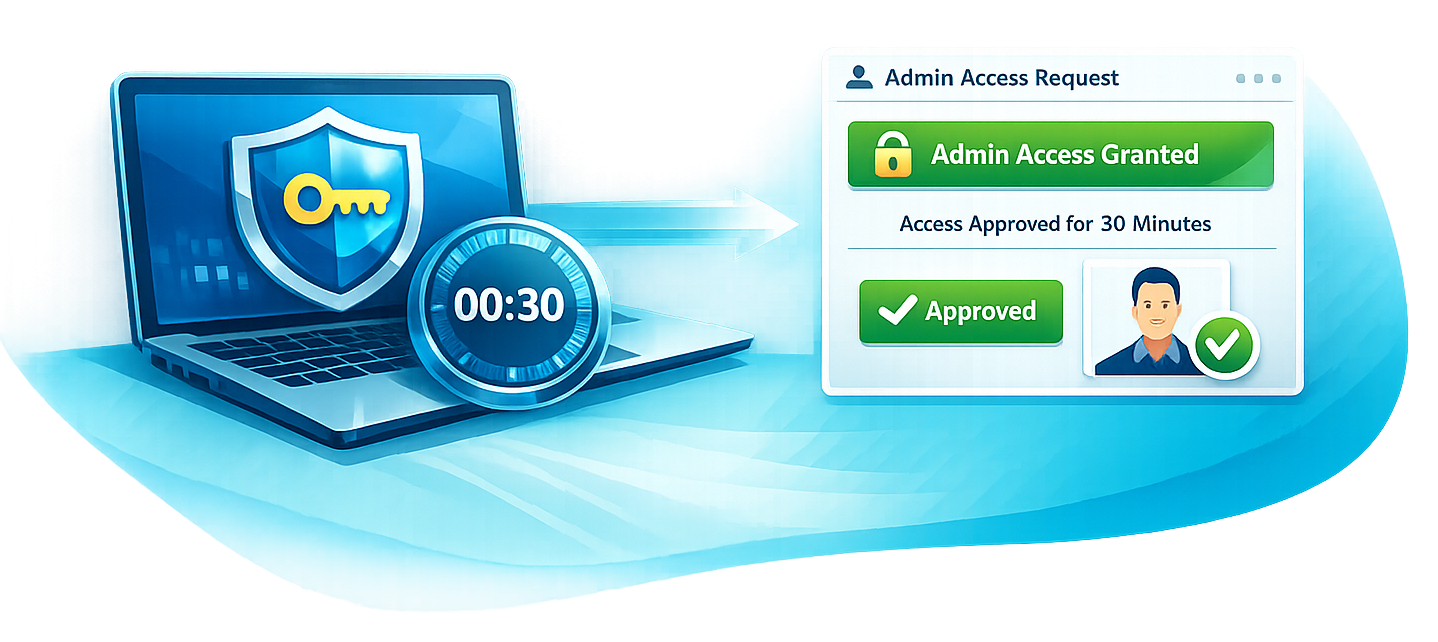
Privileged activity needs more than login control. This capability provides visibility into privileged sessions through monitoring and, where required, recording, so administrative actions on critical systems are traceable and defensible.
This improves audit readiness and incident response by creating reliable evidence of what happened during privileged access. It also deters misuse, supports investigations, and builds confidence when privileged access must be granted to internal admins or external support teams.

Shared and long-lived credentials remain one of the most common sources of privileged risk. Credential vaulting and rotation secures privileged passwords and secrets, enforces controlled checkout, and rotates credentials on a defined schedule or after use to reduce exposure.
This reduces credential leakage risk, improves compliance with security policies, and limits the impact of compromise. Operations become smoother because access is controlled without spreading passwords across teams, documents, or unmanaged tools.

Privileged access often expands over time because controls are informal and exceptions accumulate. Least privilege policy and role controls establish clear rules for who can access which systems, under what conditions, and with which level of privilege, aligned to real responsibilities and risk levels.
This reduces over-privileged access and prevents privilege creep, while making approvals simpler and more consistent. It also improves governance by clarifying ownership and ensuring privileged access stays aligned to operational needs and compliance requirements.

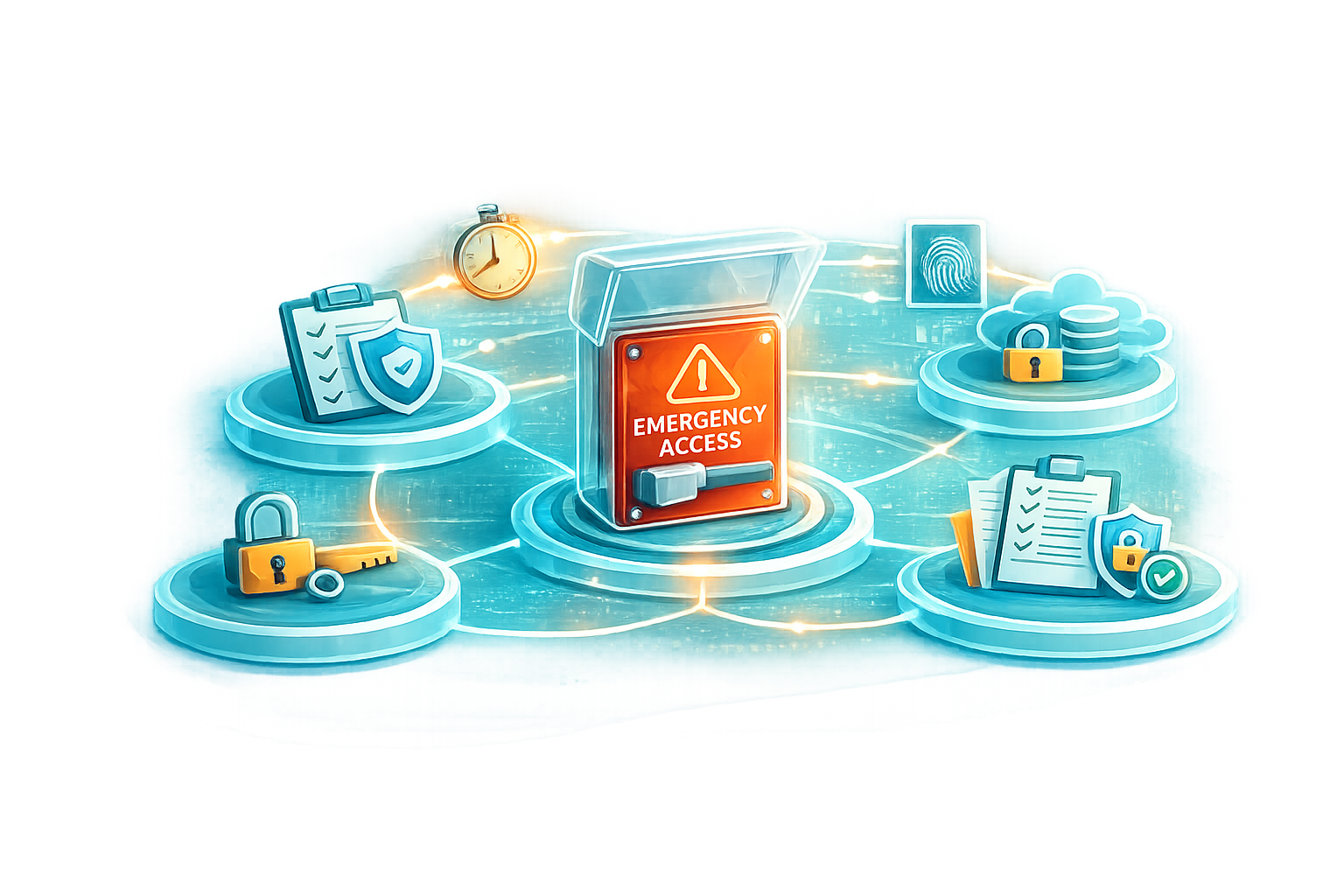
Emergency access is necessary, but it is also one of the most abused access paths when not governed. This capability defines controlled break-glass procedures, time-bound access, strong authentication requirements, and evidence collection so emergencies remain exceptional and accountable.
This improves resilience and response readiness without creating an unmanaged backdoor. Teams can act quickly when needed, while security gains visibility, traceability, and assurance that emergency access is used appropriately and reviewed afterward.
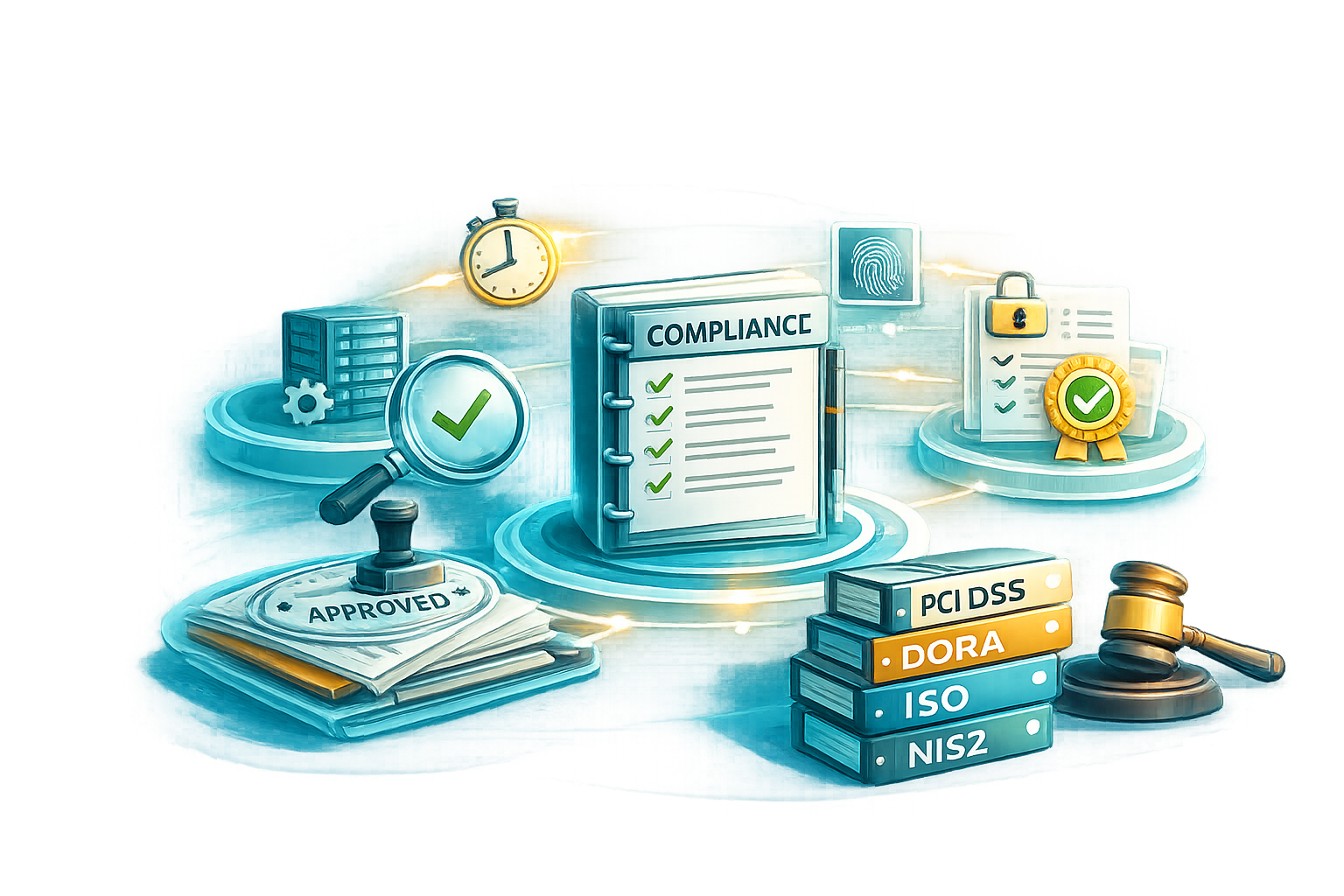
Regulators and auditors increasingly expect privileged access to be controlled, traceable, and provable. This capability consolidates privileged access evidence across requests, approvals, credential use, and session activity so you can demonstrate compliance with common frameworks and regulations such as ISO 27001/27002, NIS2, DORA, PCI DSS, and many national cybersecurity frameworks in Europe and the Middle East (for example KSA NCA ECC, SAMA, UAE NESA/ISR, Qatar NIA).
The outcome is faster audits and fewer findings because evidence is complete and consistent. It reduces the effort of responding to auditors, strengthens defensibility during investigations, and gives leadership confidence that privileged access is governed in a way that meets regulatory expectations.
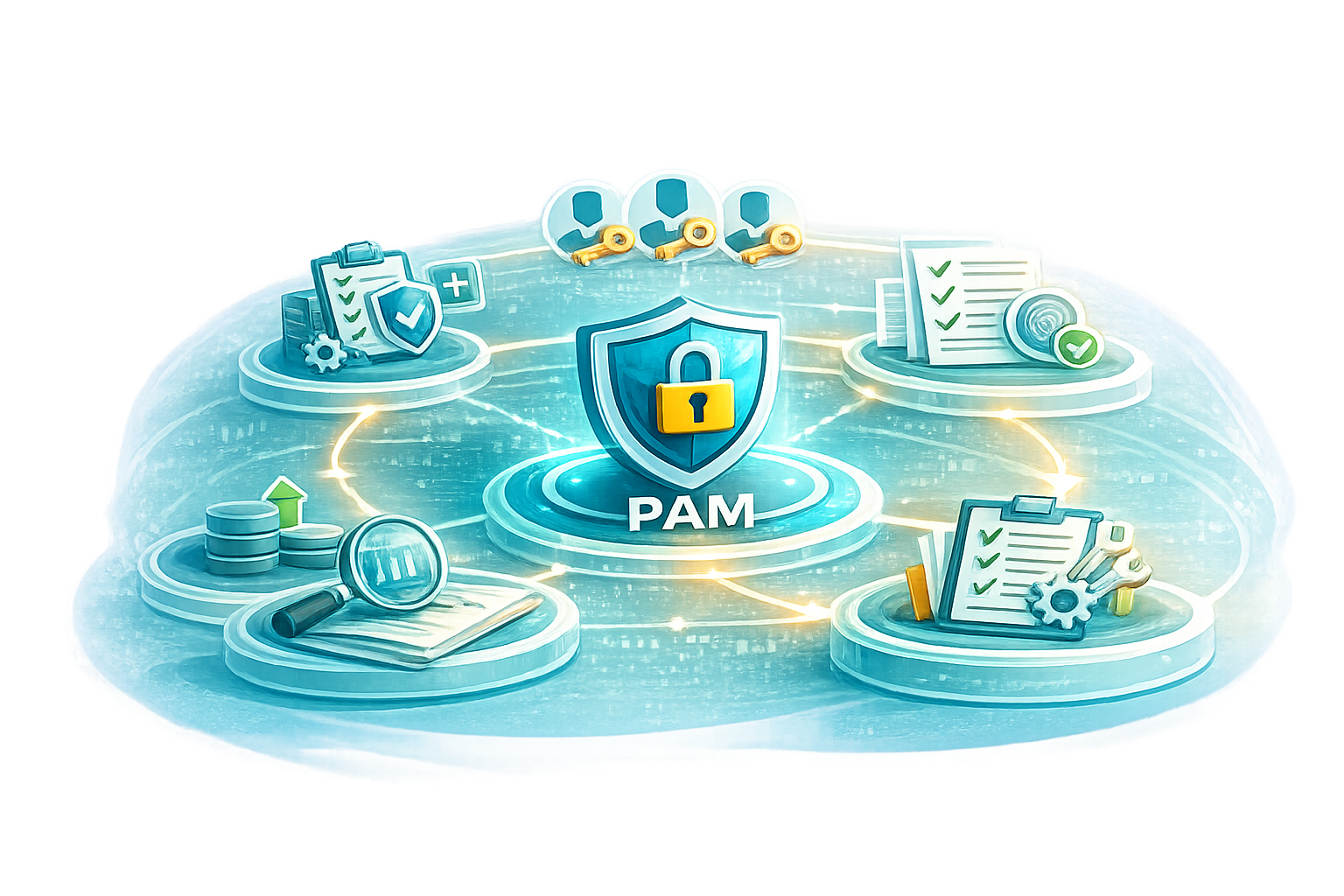
Privileged access is a living capability that must keep pace with new systems, changing teams, and evolving risk. This capability defines how PAM is operated day to day, including ownership, onboarding and offboarding workflows for systems and admins, support processes, monitoring, and continuous improvement to maintain control as the environment changes.
This reduces operational friction and prevents controls from degrading over time. It also helps expand PAM coverage steadily, keeps policies consistent, and ensures privileged access remains secure, usable, and sustainable long after go-live.
How We Deliver Successful IT Privileged Access Projects
Successful privileged access is the balance between speed and control. The work succeeds when admins can do their job without workarounds, while security gets clear visibility, traceability, and confidence that privileged access is consistently governed, especially in regulated environments.
Use Case Discovery With Admin and DevOps Teams
We start by understanding how privileged work happens in reality. Workshops with IT operations, DevOps, and security clarify access journeys, tools, constraints, and where risk and friction exist today.
Target Model and Policy Design
We define who gets access to what and under which conditions. This includes least privilege rules, approvals where needed, time-bound access, break-glass governance, and audit requirements aligned to your operating model.

Fast Risk Reduction Through Phased Rollout
We prioritize high-risk systems and privileged paths first, then expand in waves. This delivers early control and measurable audit value quickly while minimizing disruption to operations.

Integration and Onboarding Factory
We establish ownership, runbooks, monitoring, reporting, and support processes so PAM stays effective as systems and teams change. This prevents control degradation and keeps coverage expanding over time.

Operational Readiness and Continuous Improvement
We establish ownership, runbooks, monitoring, reporting, and support processes so PAM stays effective as systems and teams change. This prevents control degradation and keeps coverage expanding over time.
Privileged IAM for IT
Platforms We Deliver

SSH PrivX enables just-in-time privileged access with strong traceability and supports OT use cases and post-quantum readiness planning.
Continue reading
One Identity Safeguard secures privileged access through vaulting, just-in-time approvals, and session monitoring. It helps reduce standing privilege, protect credentials, and provide audit-ready evidence for administrative activity across critical systems.
Continue reading
