B2B & Partner Access

B2B Access: secure, seamless access for partners and suppliers

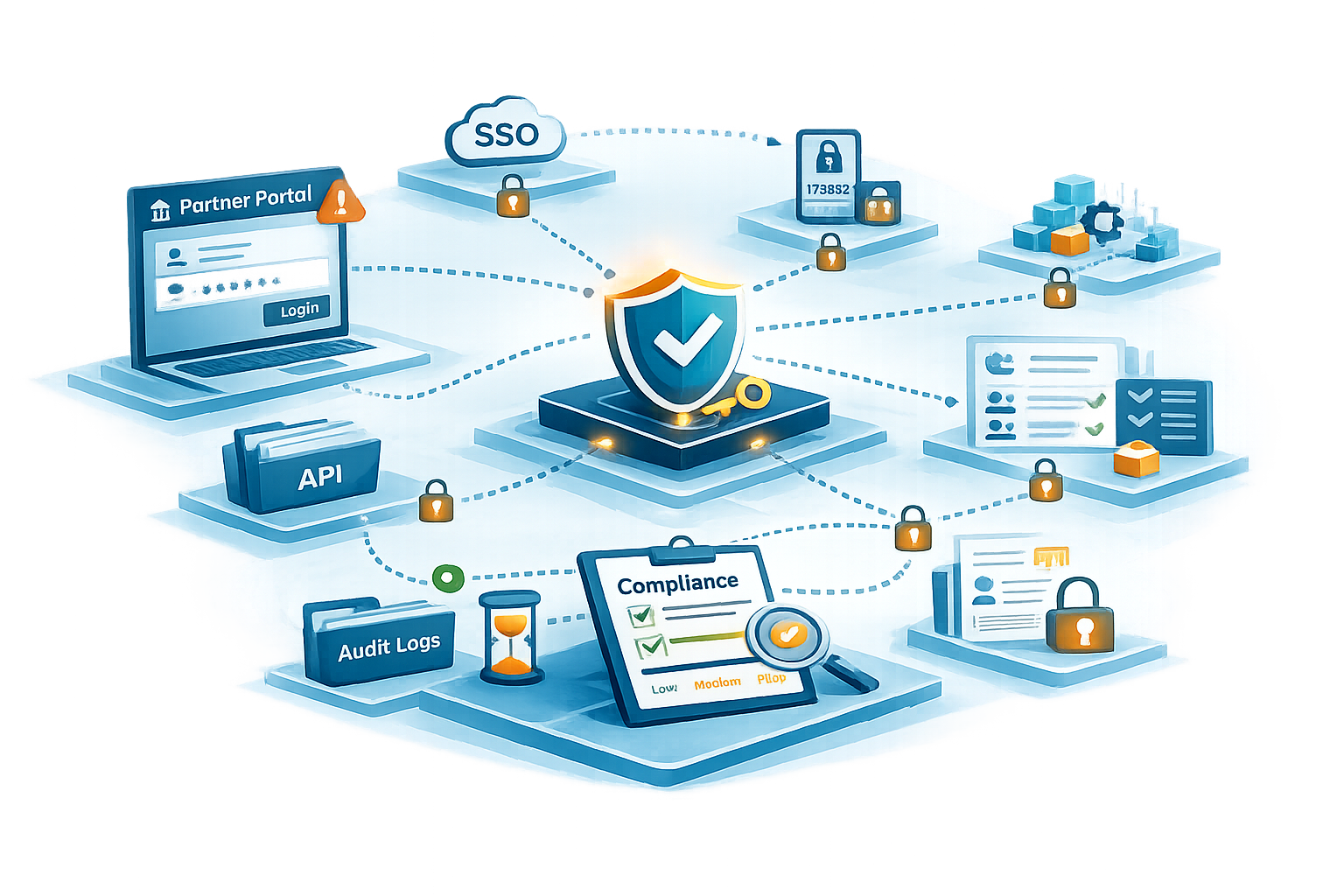
B2B Access Management helps you securely onboard and manage external users such as partners, suppliers, contractors, and third-party service providers. It enables controlled access to applications, portals, APIs, and shared resources without extending your internal directory beyond what is necessary.

B2B access becomes complex when identities span multiple organizations, roles change frequently, and access must be aligned with contracts, projects, and separation-of-duties. We help you design the right onboarding and access model, apply strong authentication and conditional access, and establish governance that keeps access controlled and auditable over time.

Want to improve partner onboarding while maintaining strong access control?

Book a discovery call

Prefer to describe your scope first? Submit the following request and we will come back with next steps Tell us about your needs.

How We Help

B2B access is not only about authentication. It is about onboarding external users at scale, keeping access aligned to business relationships, and maintaining control as partners change roles, projects, and responsibilities. We help you design the right B2B model and roll it out with strong security and low friction.

We help you define a B2B access approach that fits your partner ecosystem and operating model. Together, we clarify partner types and access patterns, design the onboarding and lifecycle model, and translate it into a phased roadmap that balances security, usability, and governance while keeping administration efficient as your ecosystem grows.

Typical deliverables:

  • Current-state review of partner access landscape (applications, portals, APIs, identity sources)

  • Partner segmentation and access model (partner types, roles, entitlements, ownership)

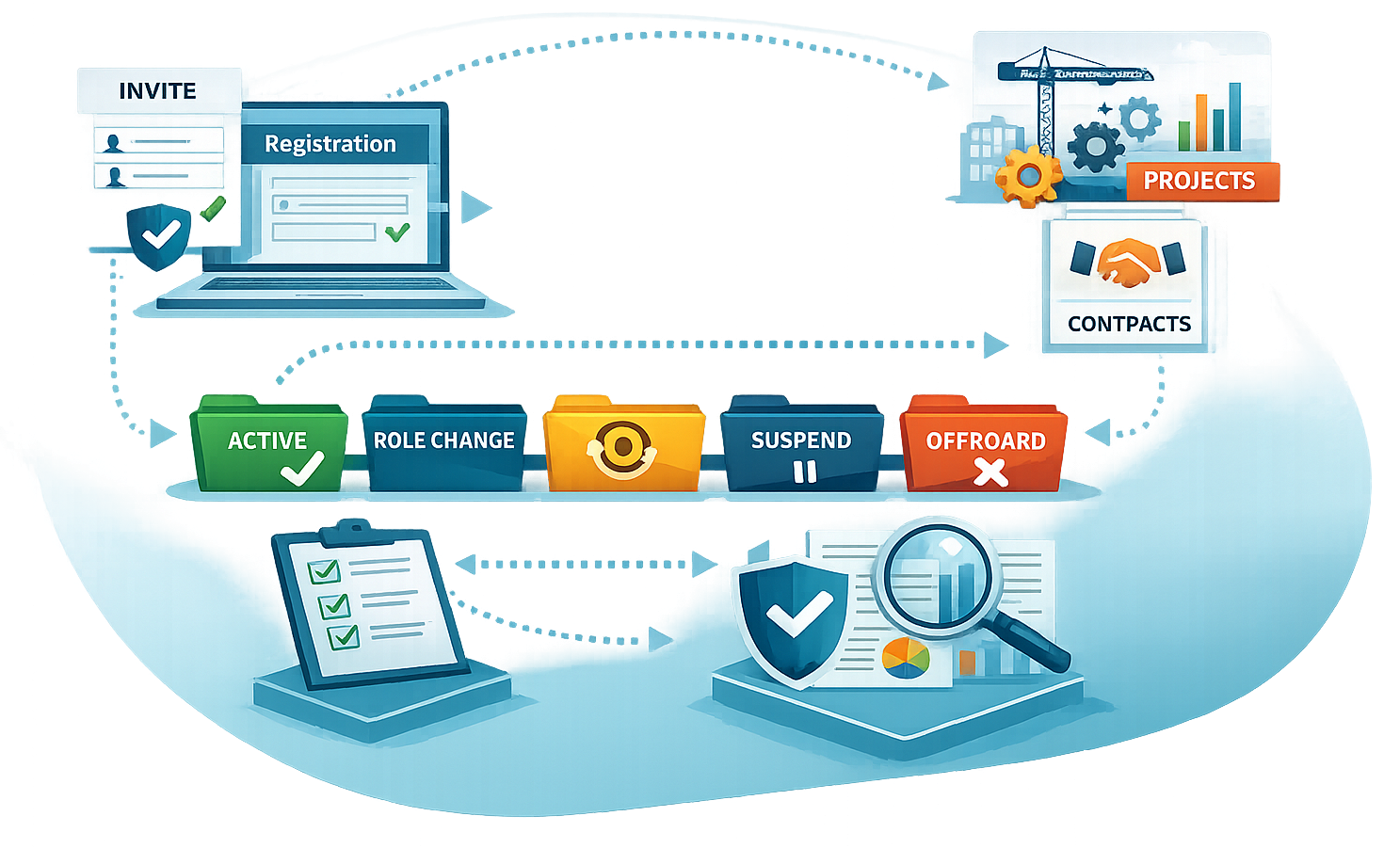
  • B2B lifecycle design: invite, onboard, change, suspend, offboard

  • Target architecture and integration approach (IdP federation, directories, portals, APIs)

  • Phased rollout roadmap with quick wins and scale plan

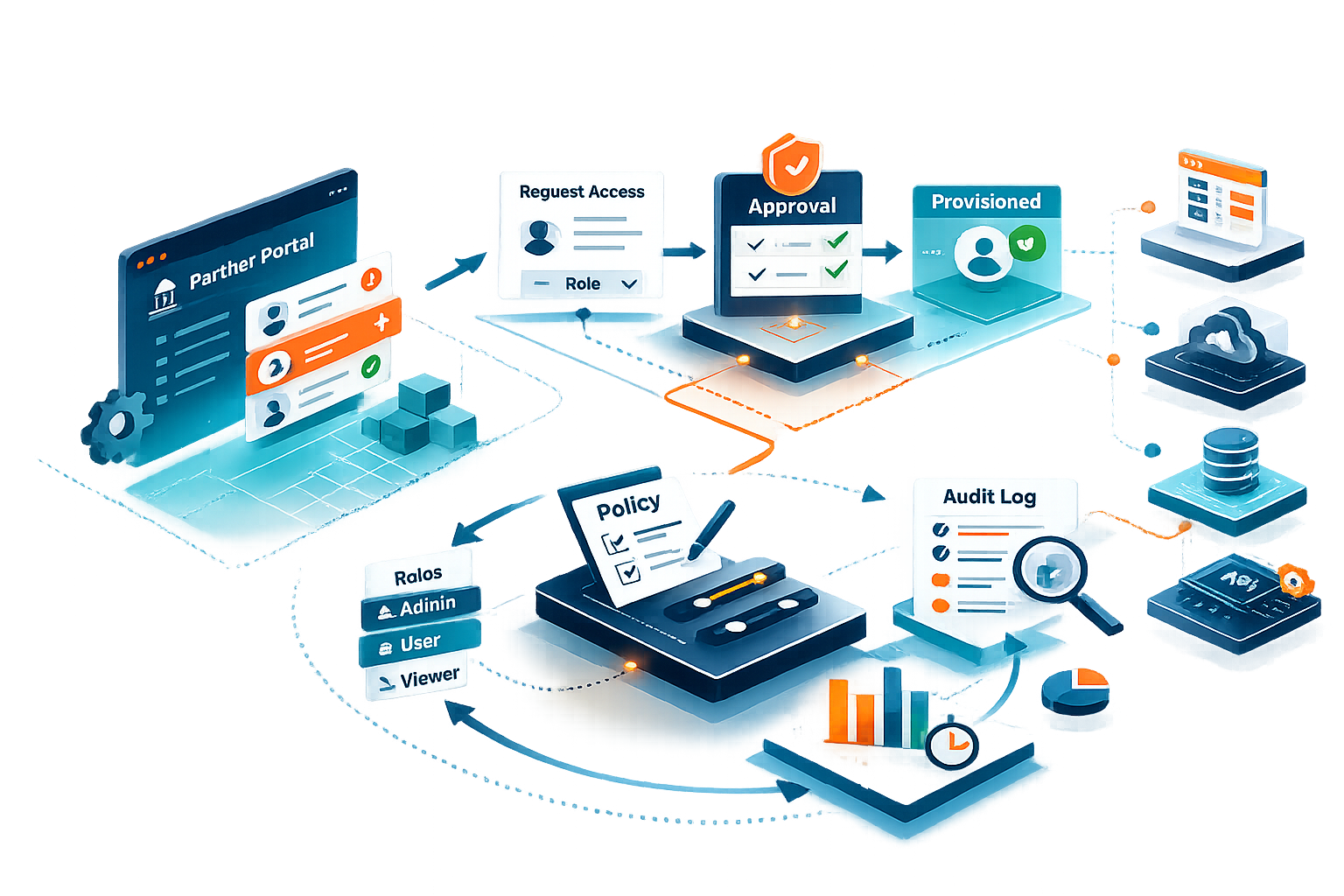
We help you implement a practical onboarding and governance model for external users so partner access stays controlled, up to date, and auditable. We design registration or invitation flows, approvals and ownership, role and entitlement mapping, and lifecycle controls aligned to contracts and projects. Where needed, we enable delegated administration so partners can manage their own employees within an approved scope, without losing central control or auditability.

Typical deliverables:

  • Partner onboarding flow design (invitation, registration, verification, terms and consent where needed)

  • Access request and approval model (who approves what, internal owners, exception handling)

  • Delegated administration model for partners (partner admins, scoping rules, what can be managed, guardrails)

  • Partner role and entitlement model (mapping to applications, data sets, and APIs)

  • Lifecycle governance controls (change triggers, suspension, offboarding, recertification cadence)

  • Reporting and audit evidence model (traceability, delegated actions logging, access reviews, ownership)

We help you integrate B2B access into your application and IAM landscape so partner sign-in is consistent, secure, and scalable. We implement federation and policy controls, enable onboarding automation where possible, and prepare operations for reliable access and auditability, including delegated administration.

Typical deliverables:

  • Integration design for portals, apps, and APIs (SSO/federation patterns, token and session approach)

  • Security policy baseline (MFA, step-up, conditional access, session controls)

  • Onboarding and access assignment approach (provisioning where possible, role/group mapping, automation options)

  • Delegated administration controls (scope rules, approvals, logging and monitoring)

  • Operational readiness package (runbooks, monitoring, support and governance procedures)

If you already know your scope and needs, send an inquiry and we will respond with next steps. If you prefer to talk first, book a short discovery call.

Send us your request

B2B Outcomes You Can Measure

B2B access should improve collaboration without increasing risk. With the right onboarding, delegated administration, and governance controls, you can onboard partners faster, reduce manual workload, and keep access controlled and auditable across applications and data.

  • Faster partner onboarding (invite and registration flows)

  • Less admin effort (delegated partner management)

  • Stronger security (MFA and step-up controls)

  • Better auditability (approvals, reviews, reporting)

  • Scalable access (portals, apps, APIs)

B2B & Partner Access

What B2B Access Delivers

Partner access often starts smoothly but becomes messy as projects change, people move, and contracts evolve. A structured onboarding and lifecycle capability keeps external identities consistent across portals and applications by covering invitation or registration, verification, and controlled changes through to suspension and offboarding, all tied to real business relationships.

The result is faster onboarding with fewer manual steps, less “access drift” over time, and stronger control over who still has access and why, which improves both security posture and audit readiness.

In mature B2B ecosystems, the most scalable model is when partners can manage their own users, but only within clearly defined boundaries. Delegated administration enables partner admins to onboard, update, and remove their employees for specific scopes such as a portal, a tenant, a set of roles, or a project, while guardrails like approvals for elevated access, role limits, and full activity logging keep governance centralized.

This significantly reduces internal workload and accelerates partner operations, while improving access quality because changes happen closer to the source, with traceability preserved through strong controls and reporting.

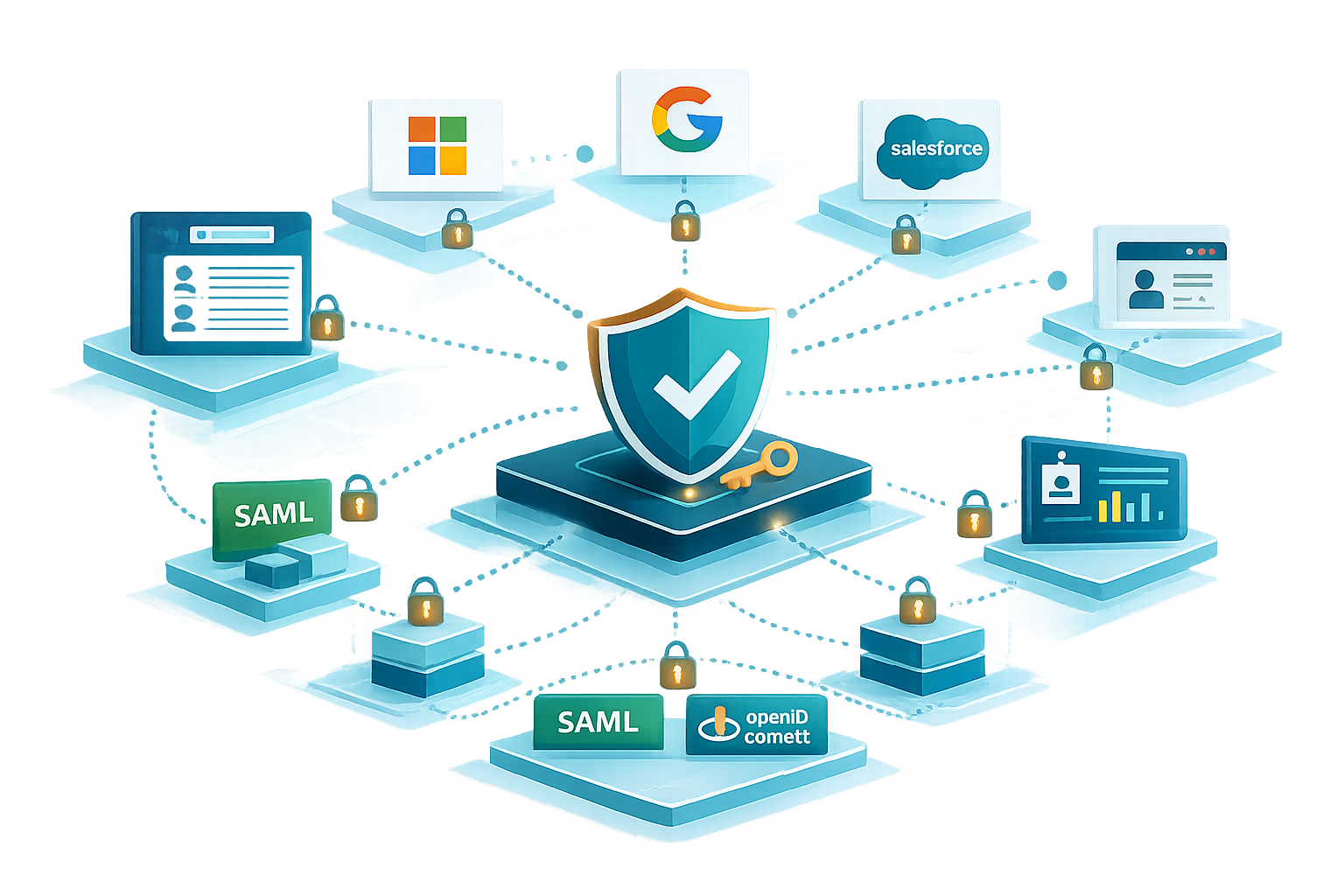
B2B access frequently spans multiple identity providers, especially when partners already manage their own directories. Identity federation and trust makes it possible to accept partner identities through standards like SAML and OpenID Connect, while enforcing consistent authentication policies and trust boundaries across organizations.

This reduces account duplication, speeds up onboarding for new partners, and strengthens security by applying uniform controls such as MFA and step-up authentication, with clearer traceability of who accessed what and under which trust relationship.

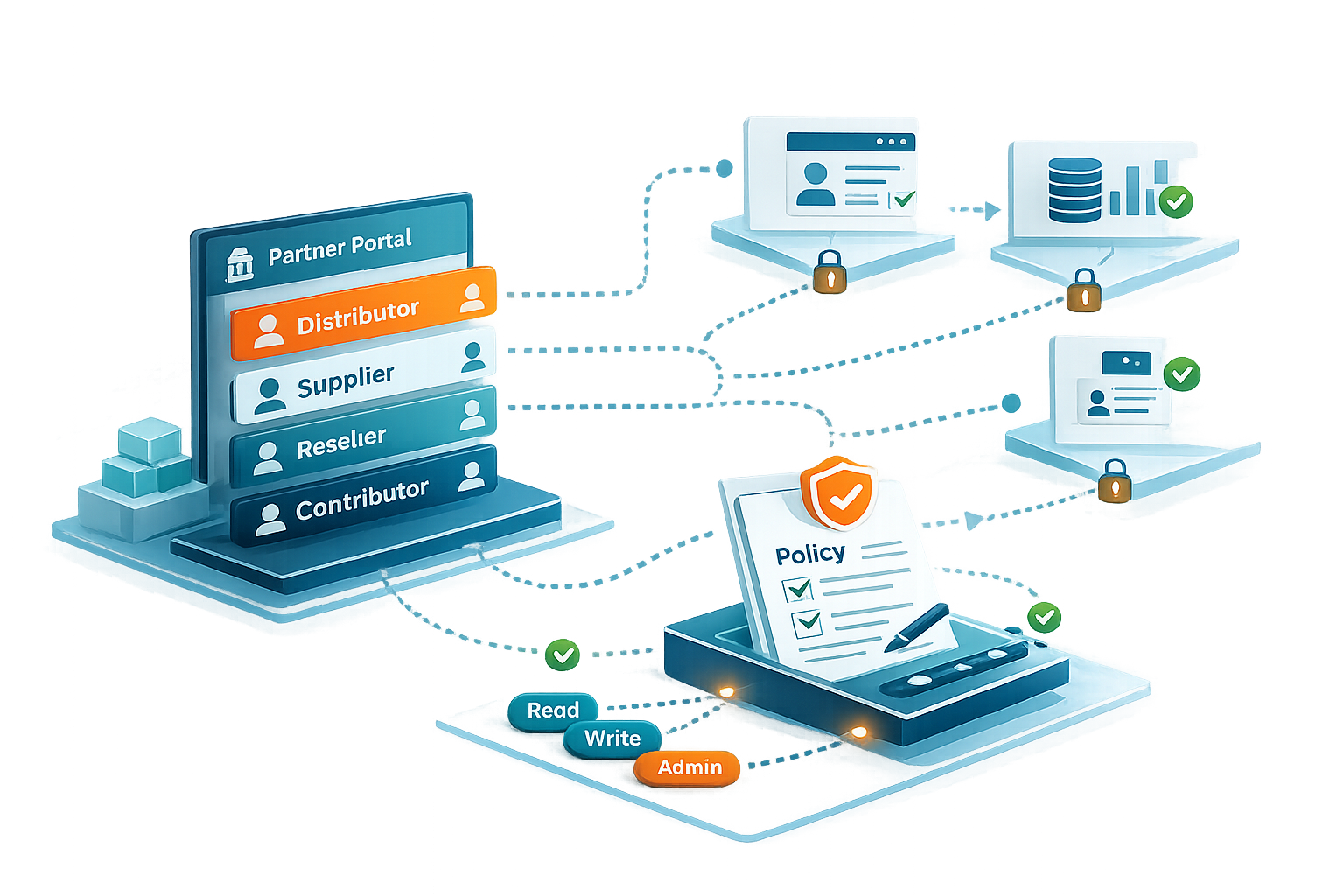
Partner access usually depends on roles that reflect real responsibilities such as distributor, supplier, reseller, or project contributor. Role and entitlement mapping establishes a clear model that translates business roles into application permissions and API scopes, with ownership and approval rules that keep changes controlled over time.

This improves least privilege by avoiding ad hoc access grants, makes access requests easier to understand and approve, and supports auditability through transparent mappings between partner roles, entitlements, and the systems they unlock.

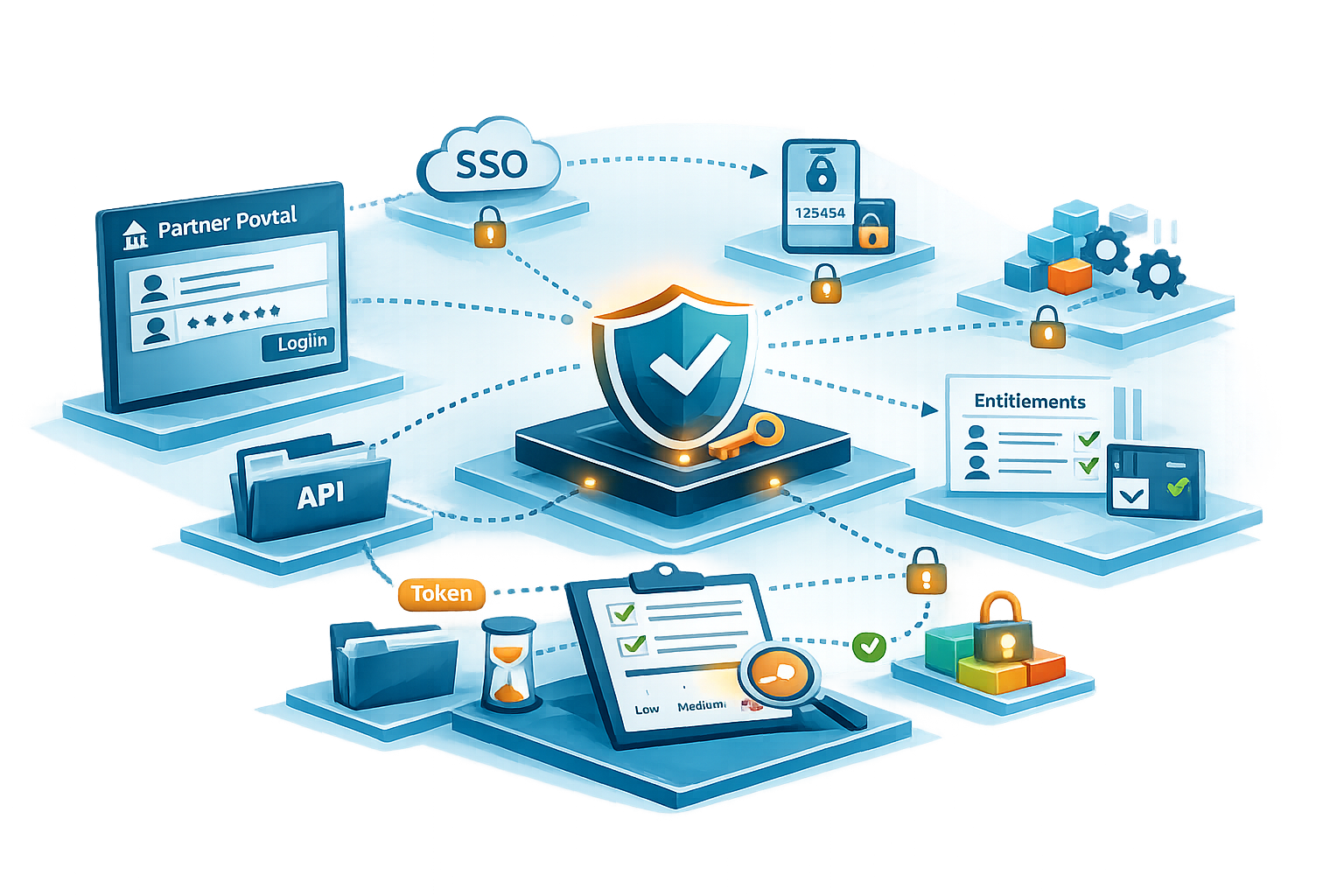
B2B access often carries higher risk because users are external and contexts vary widely across devices, networks, and locations. Secure authentication and conditional access brings consistent sign-in controls to partner journeys through MFA, step-up authentication for sensitive actions, and context-based policies that adapt requirements to risk.

This strengthens security without creating unnecessary friction for low-risk access, reduces account takeover exposure, and improves governance by making authentication decisions traceable through clear policy enforcement and sign-in visibility.

External access tends to persist longer than intended unless it is regularly reviewed. Partner access reviews and auditability provides a structured way to validate who still needs access, confirm ownership, and capture evidence for audits, including delegated administration actions and approval trails.

This reduces access sprawl and orphaned partner access, improves compliance posture with clear evidence and reporting, and gives stakeholders confidence that partner access remains aligned to contracts, projects, and responsibilities.

Many B2B interactions happen through partner portals and APIs rather than classic enterprise applications. API and portal access enablement connects external identities to these channels through consistent authentication, token and session controls, and entitlement-based access decisions that work across web, mobile, and API consumers.

This improves partner experience with a consistent sign-in and authorization model, reduces integration rework by standardizing patterns, and strengthens security by enforcing least privilege and step-up controls for sensitive data and operations.

B2B access quickly becomes a day-to-day operational concern as partner onboarding, access changes, and support tickets scale. Operational model and support readiness defines the processes, ownership, runbooks, and monitoring needed to keep partner access reliable, secure, and responsive, including how delegated administration is governed and escalations are handled.

This reduces downtime and support friction, ensures consistent governance over time, and makes B2B access sustainable as your partner ecosystem grows across applications, portals, and regions.

How We Deliver Successful B2B Access Projects

B2B access should help you onboard partners faster while increasing security, not creating more operational risk. Our delivery approach focuses on rapid partner enablement, strong authentication and access controls, and high visibility into who has access to what and why, with governance that stays effective as partners and projects change.

Business-Driven Use Case Discovery

We align B2B access with how partners actually work with your business. Through focused workshops with business and IT stakeholders, we clarify partner types, key journeys, application touchpoints, and priorities. The outcome is a clear set of access use cases and rollout scope that guides implementation.

Delegated Administration With Guardrails

Partners can manage their own employees within an approved scope, such as specific portals, roles, or projects. Guardrails like approval steps for elevated access, scope limits, and activity logging keep control centralized, secure, and auditable while reducing internal workload.

Visibility, Governance, and Continuous Control

Partner access stays under control with clear ownership, lifecycle rules, and governance checks. We enable access reviews, reporting, and traceability so you always know who has access to what and why, and can prevent access drift as partners and projects change.

B2B & Partner Access

Platforms We Deliver

Gluu Flex is a self-hosted enterprise IAM platform with an open source core (Janssen) and an enterprise control plane, supporting SSO, SAML/OIDC federation, MFA/passwordless, and Open Banking use cases.
Continue reading
WSO2 Identity Server supports workforce SSO and CIAM by enabling federation (SAML/OIDC), MFA, adaptive authentication, and secure customer sign-up and login journeys.
Continue reading
Keycloak is an open source IAM platform for workforce and CIAM, enabling SSO, OIDC/OAuth/SAML federation, identity brokering, and LDAP/AD user federation.
Continue reading