OT and Critical Infrastructure Secure Access

OT and Critical Infrastructure Secure Access: bring IAM controls to industrial environments

OT and critical infrastructure environments were built for availability and safety, not for identity driven access control. As IT and OT converge, many organizations still rely on local accounts, shared credentials, static access lists, and inconsistent vendor access practices. This creates weak accountability, makes audits harder, and increases the blast radius when credentials are misused or compromised.

Integrating IAM into OT means applying clear identity, governance, and policy controls to industrial access. It connects OT access to real users and roles, enforces least privilege and approvals, and makes access time bound and reviewable. We help you extend your IAM operating model into OT in a practical way, so access becomes consistent across sites and zones, traceable end to end, and aligned with compliance requirements, while keeping operations moving.

Need to integrate IAM into OT while keeping full control and traceability?

Book a discovery call

If you already know your OT scope (sites, zones, systems, and vendors), send an inquiry and we will respond with recommended next steps Tell us about your needs Tell us about your needs.

How We Help

OT and critical infrastructure need the same identity discipline as IT, but adapted to segmented networks, legacy systems, and safety first operations. We help you extend your IAM model into OT so access is tied to real identities and roles, policies are consistent across sites and zones, and every privileged action becomes accountable and reviewable.

OT identity is often fragmented across sites, engineering teams, and local system accounts. We help you define what “IAM in OT” means for your environment: which identities need access, which OT systems and zones are in scope, what assurance is required, and how this fits your OT operating model. The output is a clear scope and rollout plan aligned to safety, availability, and risk priorities.

Typical deliverables:

  • Current-state review of OT identity and access patterns (local accounts, shared credentials, remote tools, vendor pathways)

  • OT access use case map and prioritization (operators, engineers, maintenance, vendors, emergency access)

  • Target scope definition by site, zone, and asset criticality (Purdue alignment where applicable)

  • Target operating model and ownership (OT/IT/security responsibilities, approvals, accountability)

  • Phased rollout roadmap with quick wins and scale plan

OT access is frequently managed as static permissions rather than governed decisions. We help you design the policies that make OT access controlled and auditable: role-based access boundaries, approval conditions, time-bound access, segregation of duties where needed, and practical controls for emergency scenarios. The output is a governance model that OT teams can operate without slowing down maintenance.

Typical deliverables:

  • OT role and access model (roles, entitlements, access boundaries by zone/asset)

  • Approval workflows and access conditions (time windows, change tickets, vendor authorization, MFA requirements)

  • Least-privilege policy set for OT privileged actions (what is allowed, what is restricted, per system type)

  • Break-glass governance for OT (who can use it, when, how it is logged and reviewed)

  • Audit evidence model and reporting requirements (what to capture, retention, review cadence)

OT IAM succeeds when it integrates with your existing identity sources and becomes part of daily operations. We implement the selected controls, integrate directories and identity sources, onboard OT systems in iterations, and establish the processes and runbooks needed for sustainable operations. The output is a working capability that scales across plants and vendors with consistent control and traceability.

Typical deliverables:

  • Integration with identity sources and admin model (AD/Entra ID, LDAP, MFA, group/role mapping)

  • Onboarding approach for OT systems and zones (by site, by asset class, by criticality)

  • Access session accountability setup (logging, monitoring/recording where required, traceability to identity)

  • Operational runbooks (onboarding/offboarding, access requests, incident response support, reviews)

  • Production readiness and handover (training, KPIs, support model, governance cadence)

If you already know your scope and needs, send an inquiry and we will respond with next steps. If you prefer to talk first, book a short discovery call.

Send us your request

OT and Critical Infrastructure Outcomes You Can Measure

Integrating IAM into OT is not only a security upgrade. It is an operational improvement. The outcomes below focus on what matters in industrial environments: safer access decisions, clearer accountability, and faster support without losing control.

  • Identity-based access to OT systems (no shared accounts)

  • Least privilege with time-bound approvals across sites and zones

  • Full traceability for audits and investigations (who, what, when)

  • Faster maintenance with consistent access processes for teams and vendors

OT and Critical Infrastructure Secure Access

What OT and Critical Infrastructure Secure Access Delivers

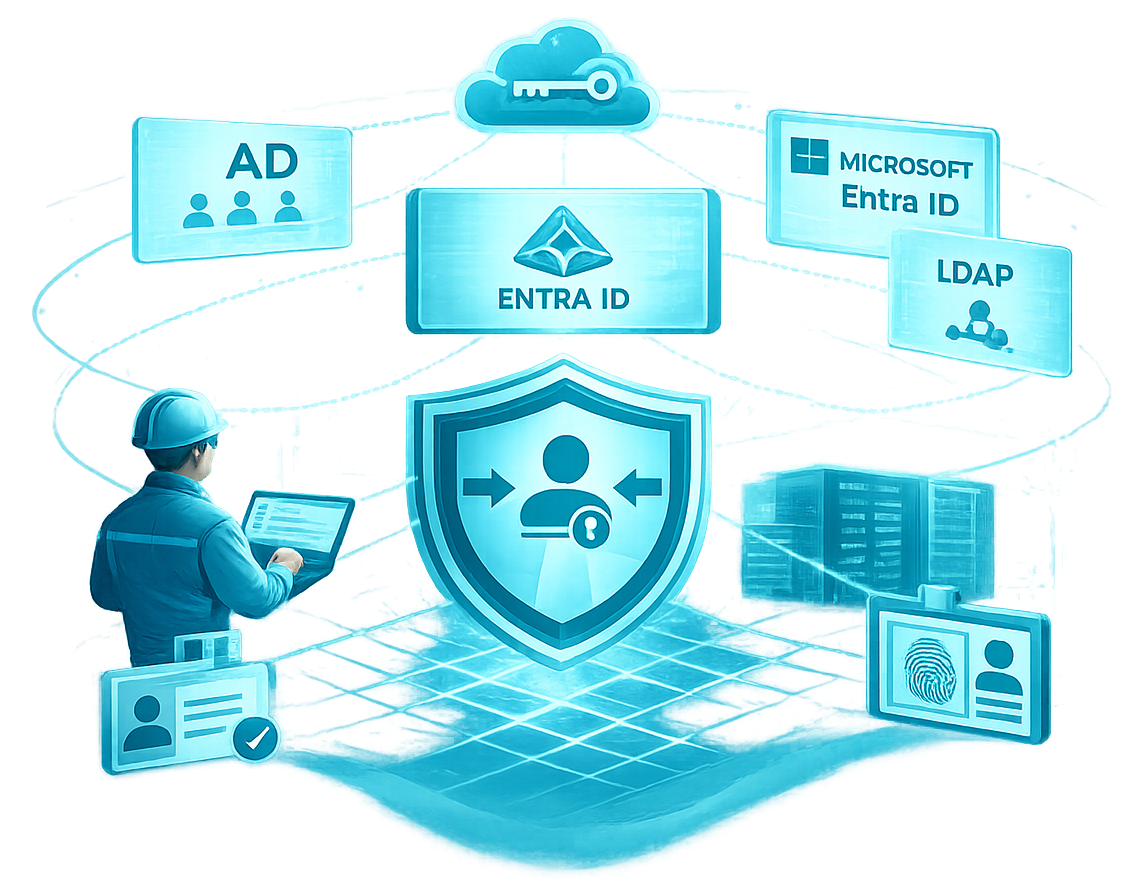
OT access is often disconnected from your enterprise identity model, relying on local users, shared accounts, and site-specific practices. This capability connects OT access to trusted identity sources such as AD, Entra ID, or LDAP, so users are consistently identified and managed across IT and OT environments.

The result is a single identity foundation for OT: role mapping becomes consistent, joiner/mover/leaver changes can be reflected faster, and access decisions can be tied to real people rather than generic accounts. This improves accountability, reduces orphaned access, and makes governance practical across multiple plants and operational teams.

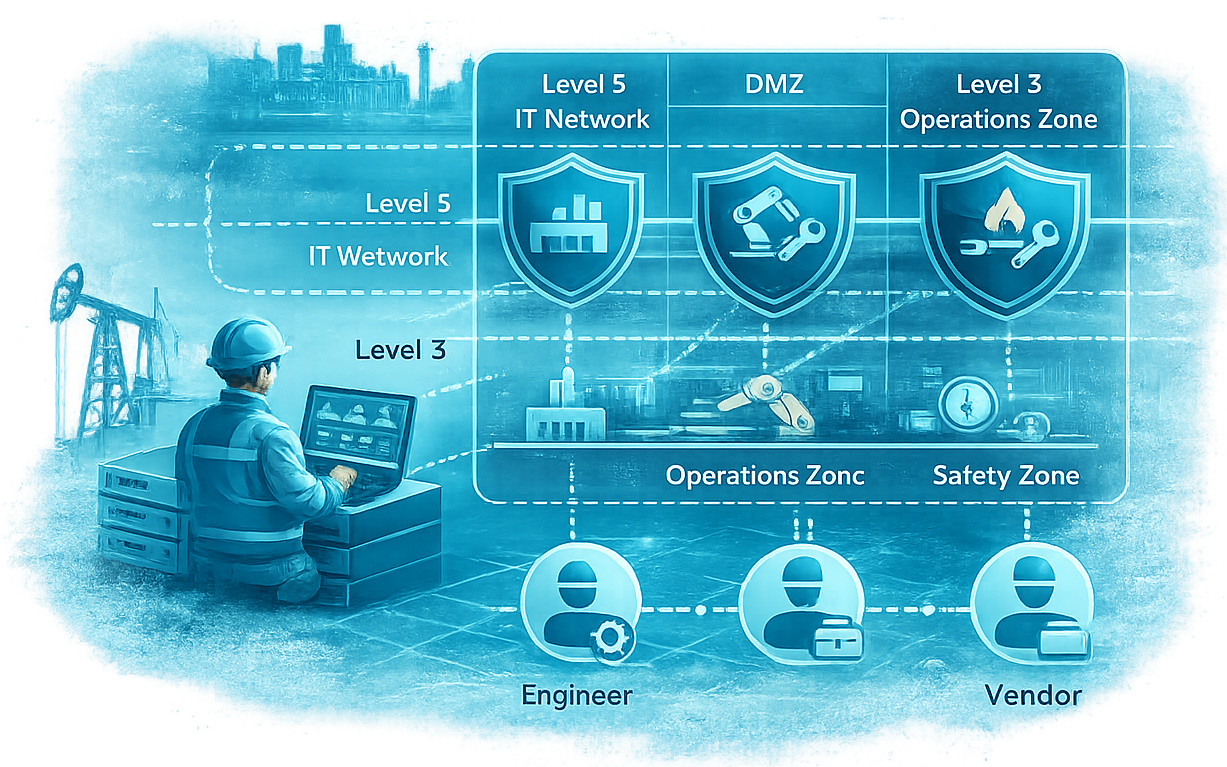
In OT, “who can access what” must reflect how plants are actually structured: sites, zones, and safety critical assets. This capability defines clear access boundaries aligned to your OT architecture (for example Purdue style zoning) and maps engineering and vendor roles to the exact systems and privilege levels they need, nothing more.

The result is enforceable least privilege in OT. Access becomes consistent across plants, easier to review, and much harder to misuse, because privileges are granted through controlled roles and scopes instead of local exceptions and broad access lists. It also reduces the blast radius of compromised credentials and makes segregation of duties and emergency access governance practical.

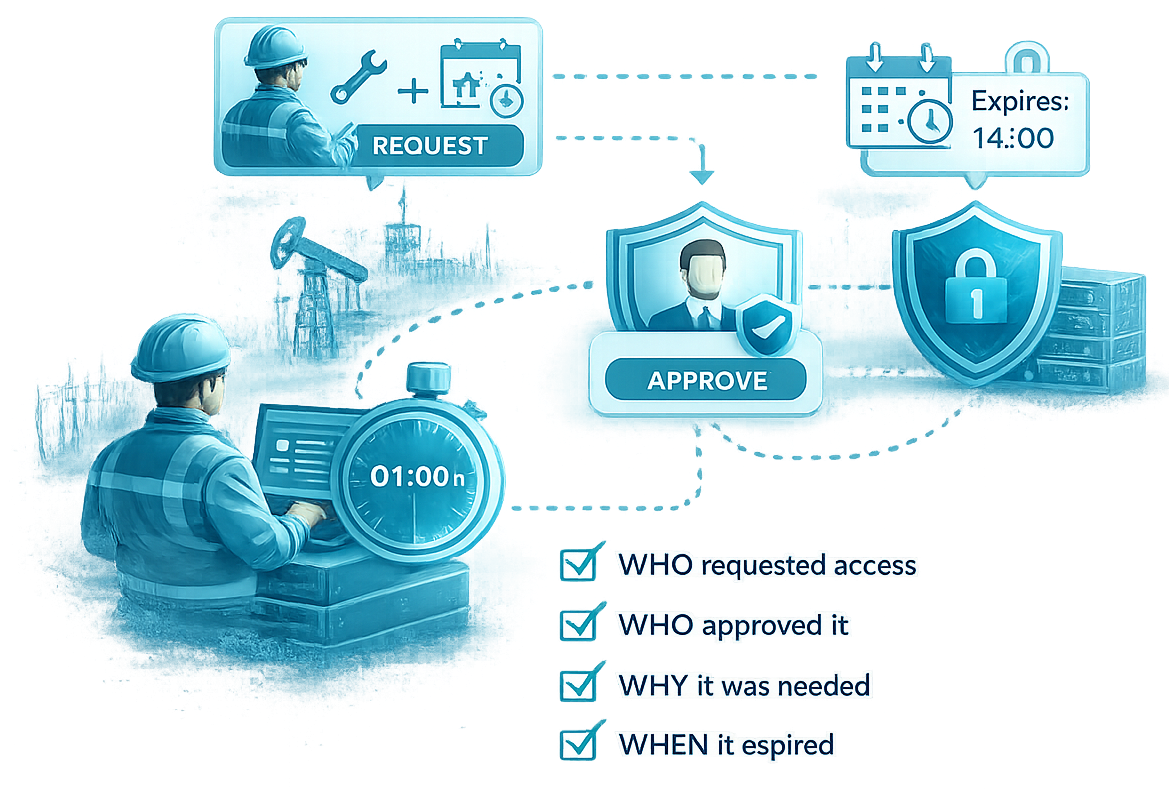
OT access is often granted as standing privileges because “it is needed for operations”. Over time, this creates permanent exposure, unclear justification, and access that outlives the actual maintenance task. This capability introduces a controlled request and approval flow for OT access, linked to roles, assets, and sites or zones.

Access is granted only for a defined purpose and time window, then removed automatically. You reduce standing privilege, keep OT teams and vendors productive, and gain clean evidence for audits: who requested access, who approved it, why it was needed, and when it expired.

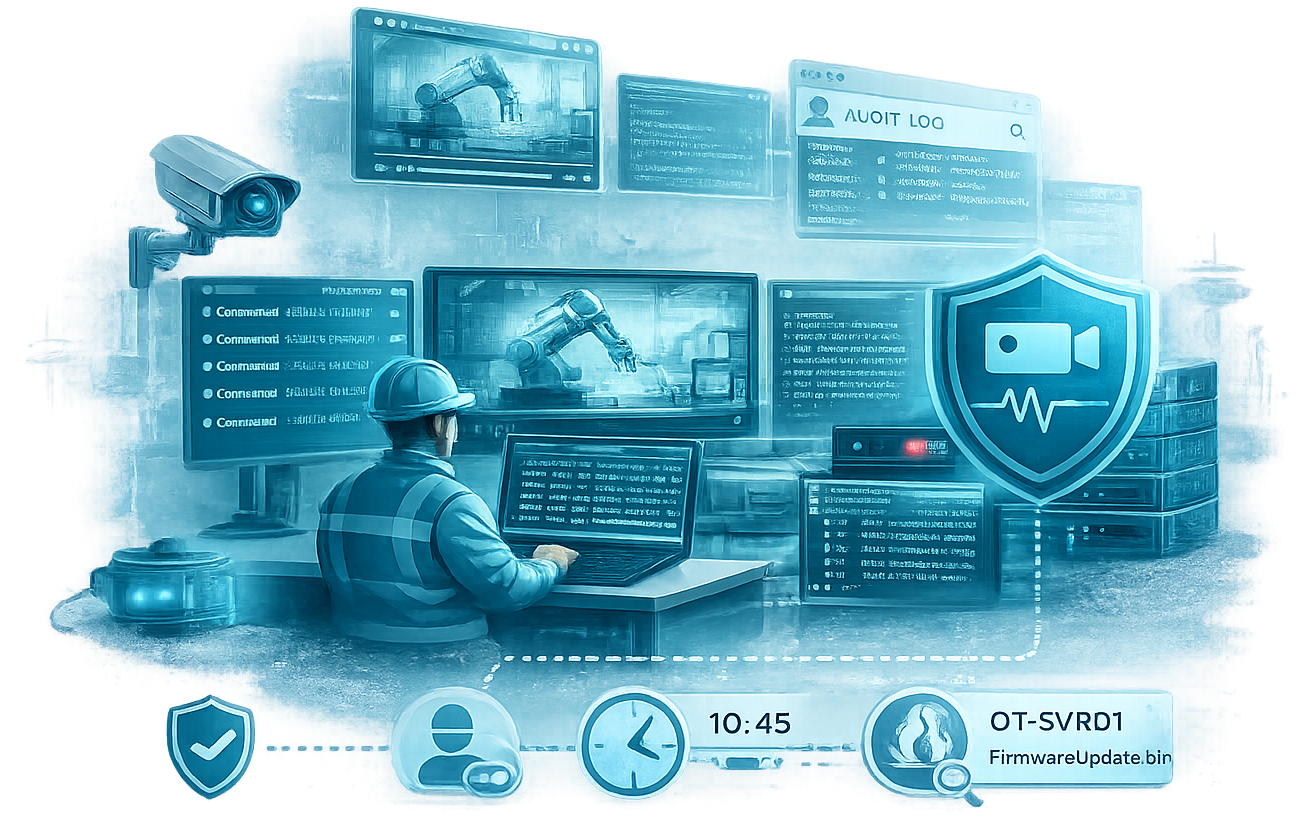
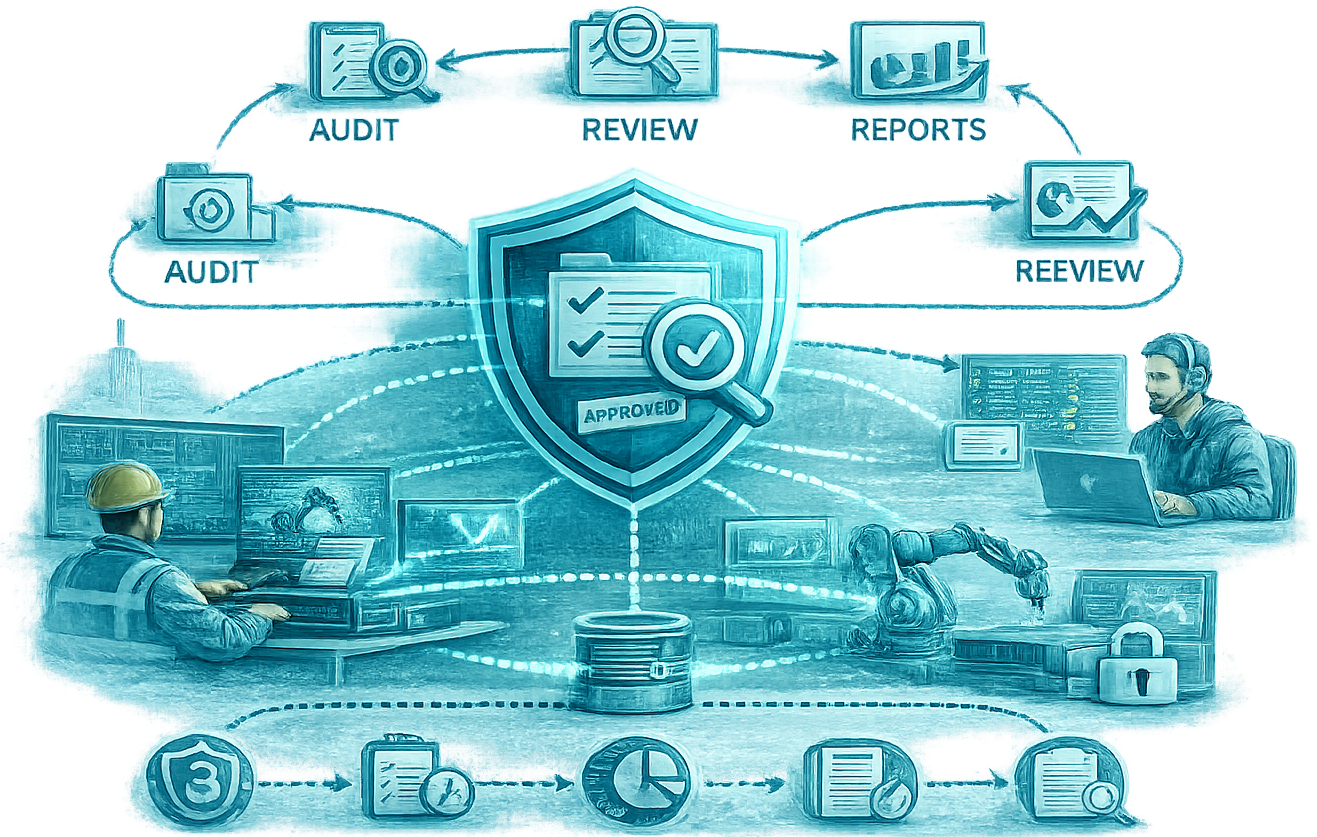
OT environments often lack reliable evidence of what was actually done during privileged access, especially when legacy systems and shared target accounts are involved. This capability ties every OT privileged session to a verified user identity and applies monitoring and recording where required, based on site, zone, and asset criticality.

You get defensible accountability without disrupting operations. Security and OT teams can see who accessed which asset, when the session occurred, what actions were performed, and retain evidence that supports audits, investigations, and incident response.

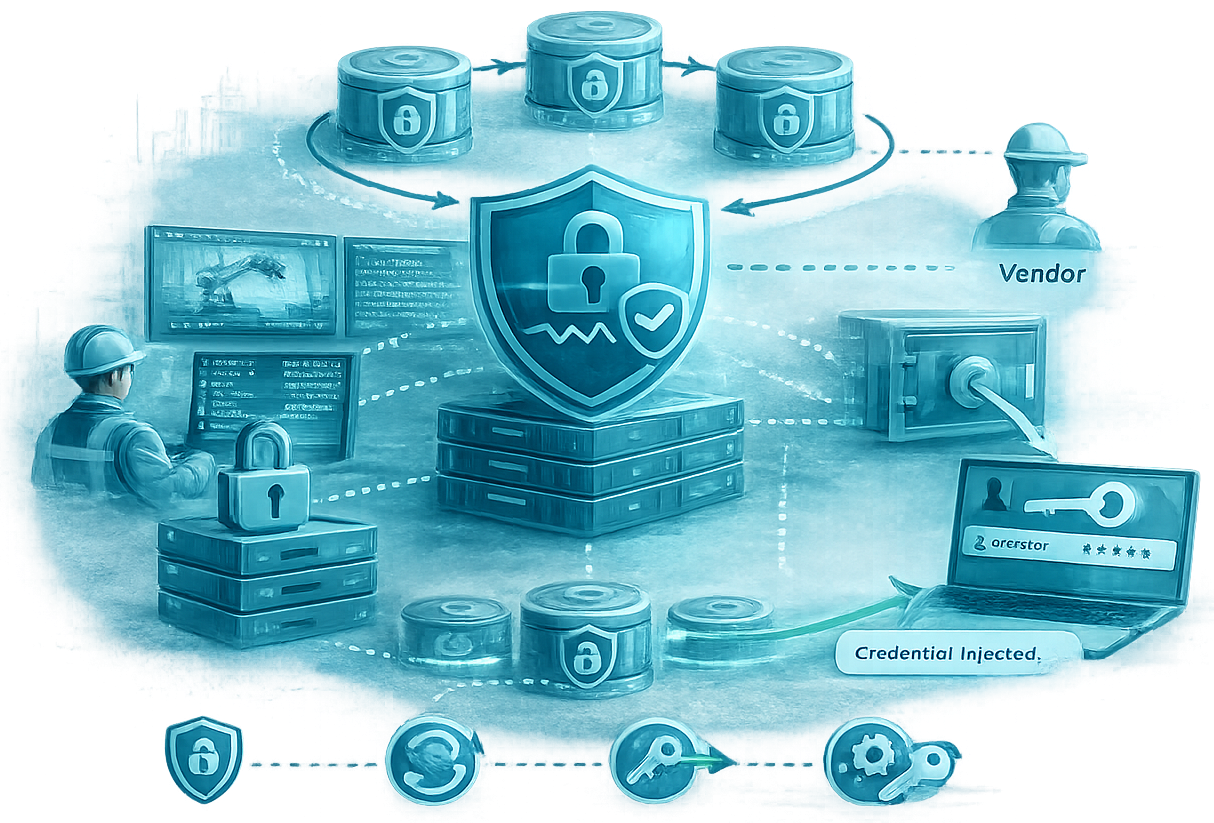
OT environments often rely on shared target accounts and long-lived passwords or keys because many systems cannot support modern identity natively. This capability reduces the risk by taking secrets out of human hands and placing them under controlled use, so access to critical OT targets no longer depends on copying, emailing, or reusing credentials.

Where possible, credentials are rotated and centrally governed. Where rotation is not feasible, credential injection can be used so users authenticate as themselves while the OT system still receives the required target credential without exposing it. The result is less secret sprawl, fewer standing shared passwords, and stronger accountability when investigating who accessed what and why.

In OT, vendors are essential, but access is often handled through informal processes, shared credentials, and long-lived exceptions that spread across sites and teams. This capability establishes a structured way to onboard vendors, define exactly which systems and zones they can reach, and enforce clear boundaries based on contract scope, task, and risk.

Access becomes predictable and controllable end to end. Vendors are granted only what they need for a defined period, approvals are traceable, and offboarding is enforced when the work ends or the contract changes. You reduce operational chaos, prevent orphaned access, and make vendor activity accountable and reviewable.

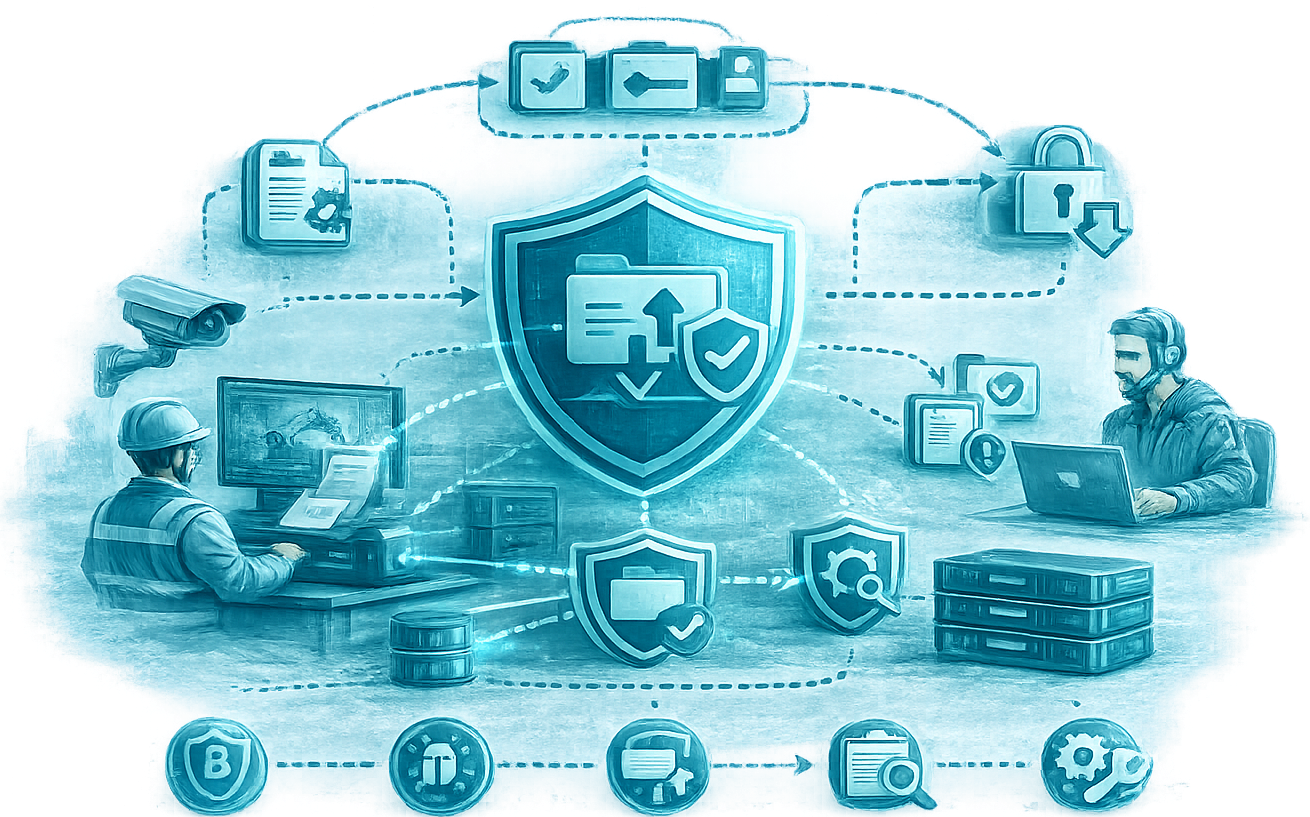
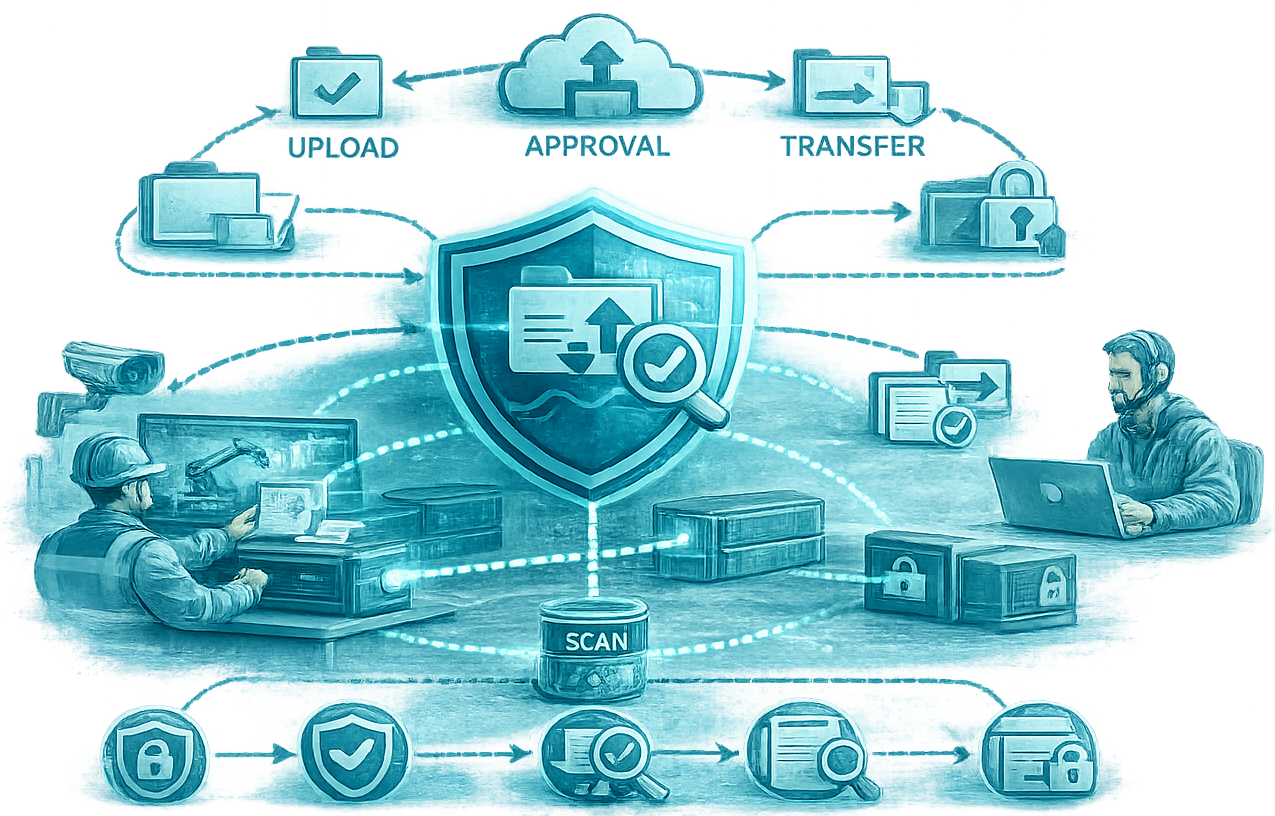
OT work frequently depends on moving sensitive files like PLC logic, configuration backups, firmware packages, and diagnostic logs. When these files are exchanged through email, shared drives, or unmanaged tools, you lose control over where they go, who accessed them, and whether they were inspected before reaching critical systems.

This capability establishes a controlled and auditable way to upload, download, and transfer OT files as part of the access process. Files can be protected with encryption and policy controls, scanned where required, and linked to the right user, request, asset, and time window. The result is safer maintenance and a clean evidence trail for audits and investigations.

Vendor access changes with contracts, projects, and support needs, and controls drift when ownership is unclear. This capability defines how third-party privileged access is run day to day including ownership, onboarding and offboarding workflows, access change handling, monitoring, and escalation so access remains controlled as vendors and systems evolve.

This reduces operational friction and prevents “shadow” access paths from reappearing over time. It keeps third-party access sustainable at scale, with policies that remain consistent, visible, and enforceable long after go-live.

How We Deliver Successful Vendor Privileged Access Projects

Successful vendor access is fast for third parties and controlled for you. We focus on enabling support without credential sharing, keeping access within clear boundaries, and ensuring every session is traceable and defensible.

Stakeholder Discovery and Vendor Reality Check

We align security, IT operations, system owners, and procurement on how vendors actually access systems today, where friction exists, and which access paths create the highest risk.

Vendor Access Model and Policy Design

We define who can access what, under which conditions, and for how long. This includes approvals, time windows, MFA and step-up rules, emergency access handling, and accountability requirements.

Secure Access Architecture and Boundaries

We onboard priority vendors and systems first, replacing shared passwords and unmanaged VPN workflows. Access is made repeatable and easy to adopt, for both vendors and internal teams.

Vendor Onboarding and Migration

We onboard priority vendors and systems first, replacing shared passwords and unmanaged VPN workflows. Access is made repeatable and easy to adopt, for both vendors and internal teams.

Governance, Evidence, and Continuous Control

We establish reviews, reporting, monitoring, and operational workflows so vendor access stays accurate as contracts, projects, and systems change, and remains audit-ready over time.

Third-Party and Vendor Privileged Access

Platforms We Deliver

One Identity Safeguard Remote Access enables VPN-free, Zero Trust remote access to privileged systems through a secure, browser-based experience. It supports RDP and SSH connections, helps simplify third-party access, and improves auditability when combined with session oversight and recording.
Continue reading