Third-Party and Vendor Privileged Access
Third-Party and Vendor Privileged Access: secure external access without shared credentials
Vendors and third parties often need privileged access to support critical systems, but traditional approaches create risk: shared passwords, unmanaged VPN access, and limited visibility into what was actually done. That weak accountability increases breach impact and makes audits and investigations harder.
Modern privileged access enables external users to connect securely with strong authentication, time-bound access where needed, and full traceability of privileged activity. We help you onboard vendors safely, keep access within clear boundaries, and make every session accountable and auditable.
Need to enable vendor access while keeping full control and traceability?
If you already know your scope and priority vendors, send an inquiry and we will respond with recommended next steps Tell us about your needs.

How We Help
Vendor access succeeds when it is easy for third parties to work, but impossible for access to drift beyond what is approved. We help you design a controlled third-party access model, enforce strong authentication and time-bound access where needed, and ensure every vendor action is traceable. The result is secure external access without shared credentials, unmanaged VPN exposure, or weak accountability.
Third-party access is often inconsistent across teams, systems, and contracts. We help you clarify which vendors need access, to which systems, under what conditions, and how accountability will be enforced. The output is a clear scope and rollout plan aligned to business and risk priorities.
Typical deliverables:
Current-state review of vendor access paths (VPN, shared accounts, jump hosts, local admins)
Vendor segmentation and prioritization (critical vendors, systems, and access scenarios)
Target operating model and ownership (approvals, sponsorship, and accountability)
Phased rollout roadmap with quick wins and scale plan
We implement the controls that make vendor access safe and manageable. This includes strong authentication, controlled access paths, time-bound access where needed, and removing credential sharing by using identity-based access and secure session mechanisms.
Typical deliverables:
Target architecture for vendor access (remote access path, identity integration, segmentation)
Authentication and policy baseline (MFA, step-up rules, context conditions)
Time-bound access and approval model (who approves what, when, and how)
Onboarding plan for priority systems and vendor groups
Vendor access must be provable. We enable session visibility and audit evidence, define review routines, and prepare operations so third-party access remains controlled as vendors, systems, and projects change.
Typical deliverables:
Session oversight model (visibility, recording where required, investigations support)
Audit evidence and reporting setup (approvals + access trails + activity traceability)
Operational readiness (runbooks, monitoring, support and escalation procedures)
Post go-live stabilization and continuous optimization plan
If you already know your scope and needs, send an inquiry and we will respond with next steps. If you prefer to talk first, book a short discovery call.

Third-Party and Vendor Access Outcomes You Can Measure
Third-party access should enable fast support without introducing unmanaged risk. With the right vendor access model, you can remove credential sharing, reduce exposure from broad VPN access, and make every privileged action traceable and defensible.
Reduced vendor risk by eliminating shared credentials and uncontrolled access paths
Faster vendor support with clear approvals and time-bound access where needed
Stronger control through least privilege and policy-based access boundaries
Audit-ready traceability with session visibility and reliable evidence collection
Lower incident impact by limiting standing access and improving investigations
Explore the outcomes we deliver through a structured third-party access approach.
Read more …
Third-Party and Vendor Privileged Access
What Third-Party Privileged Access Delivers
- Vendor Access Discovery and Risk Baseline
- Strong Authentication and Access Boundaries
- Time-Bound Vendor Access and Approvals
- Privileged Session Oversight and Evidence
- Credential Sharing Elimination and Secrets Control
- Vendor Lifecycle Governance and Access Reviews
- Privileged Access Compliance and Audit Evidence
- Operational Model and Continuous Optimization
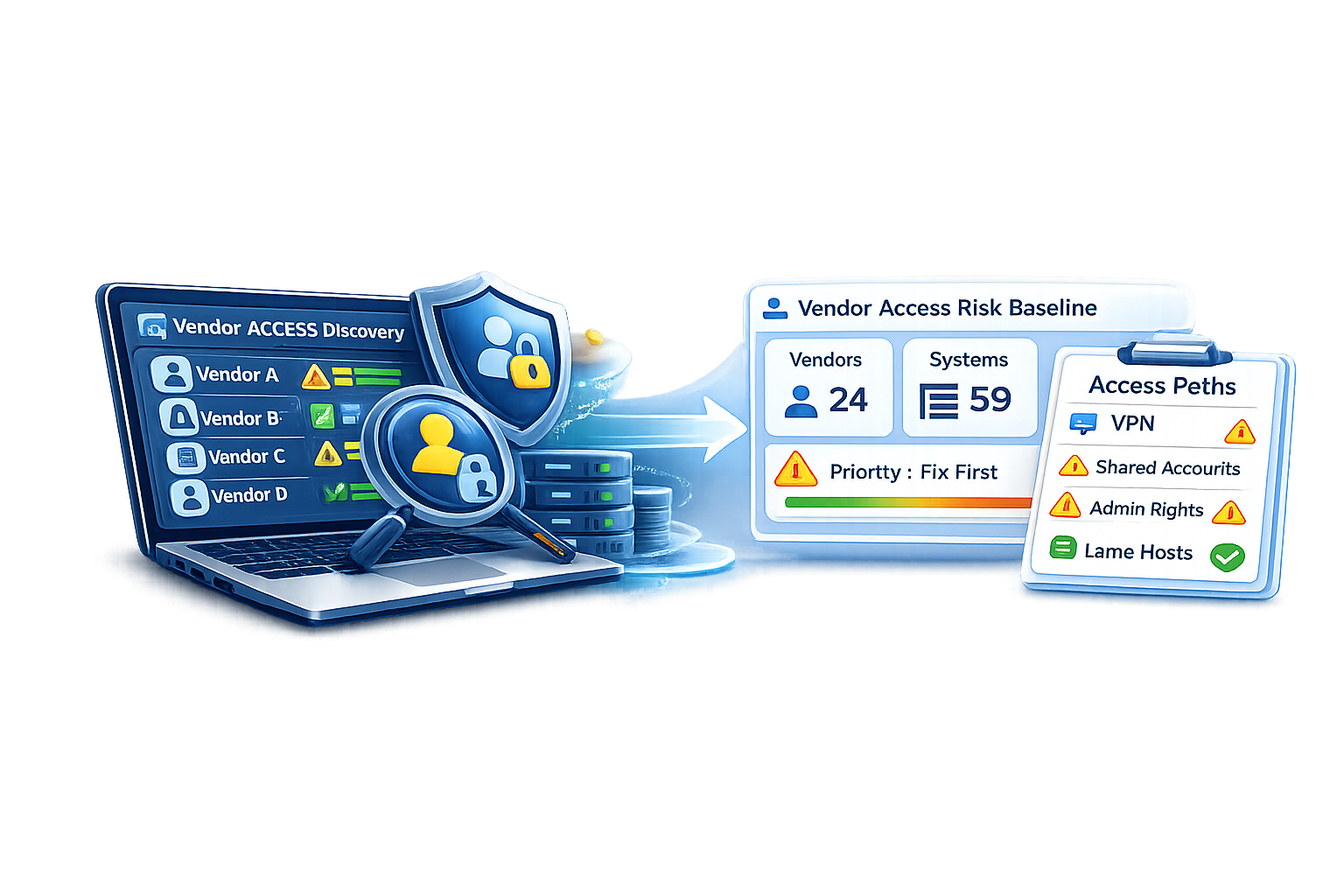
Third-party access is often spread across VPN accounts, shared admin credentials, jump hosts, and local privileged users that are hard to track. This capability builds a clear view of which vendors access which systems, how access is granted today, and where the highest-risk paths and weakest accountability exist.
This makes risk visible and actionable. It helps prioritize the vendors and systems that need immediate control, reduces unknown exposure, and creates a defensible baseline to measure improvements in governance and audit readiness.
Vendor access becomes risky when authentication is weak or access is broader than required. This capability enforces strong authentication, applies clear boundaries to what vendors can reach, and uses policy controls to align access with business need and risk.
This reduces the chance of compromise and lateral movement, while keeping vendor support practical. It improves confidence that external access is limited to the right systems, at the right times, under the right conditions.

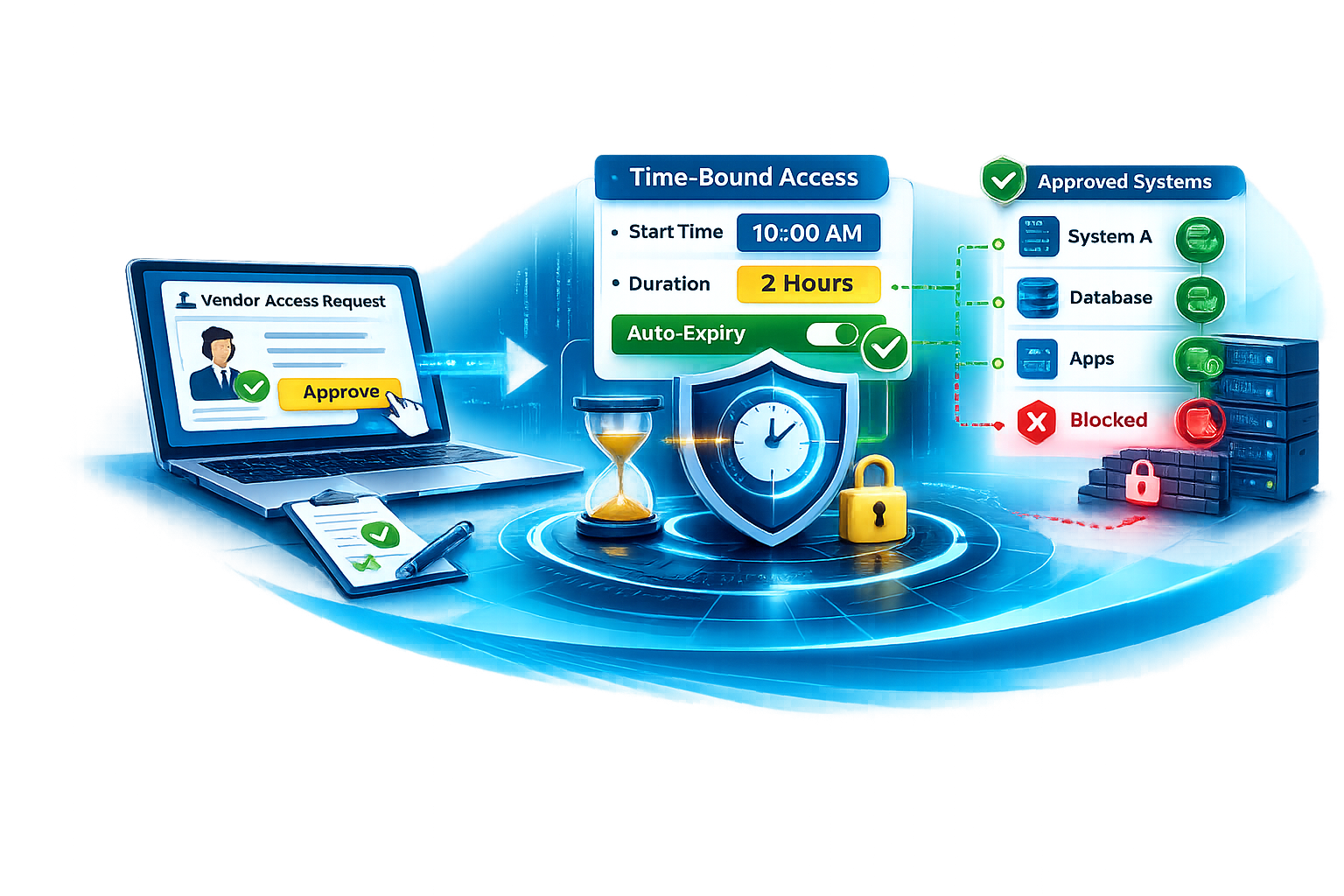
Third-party privileged access is safest when it is granted only when needed and expires automatically. This capability introduces controlled access windows for vendors, with clear approval rules tied to system criticality, support cases, and risk context, so vendor access does not remain open beyond the intended purpose.
This keeps vendor support practical while reducing standing access and limiting “always-on” exposure. It also improves accountability because every access window is traceable to a request, an approval decision, a time limit, and a defined scope.
When vendors connect to critical systems, knowing that access happened is not enough. This capability provides visibility into privileged sessions, including session oversight and, where required, recording and evidence capture, so actions taken during vendor access can be reviewed and investigated reliably.
This strengthens incident response and audit readiness by making vendor activity provable and defensible. It also deters misuse, accelerates investigations, and builds confidence that third-party access remains within approved boundaries.

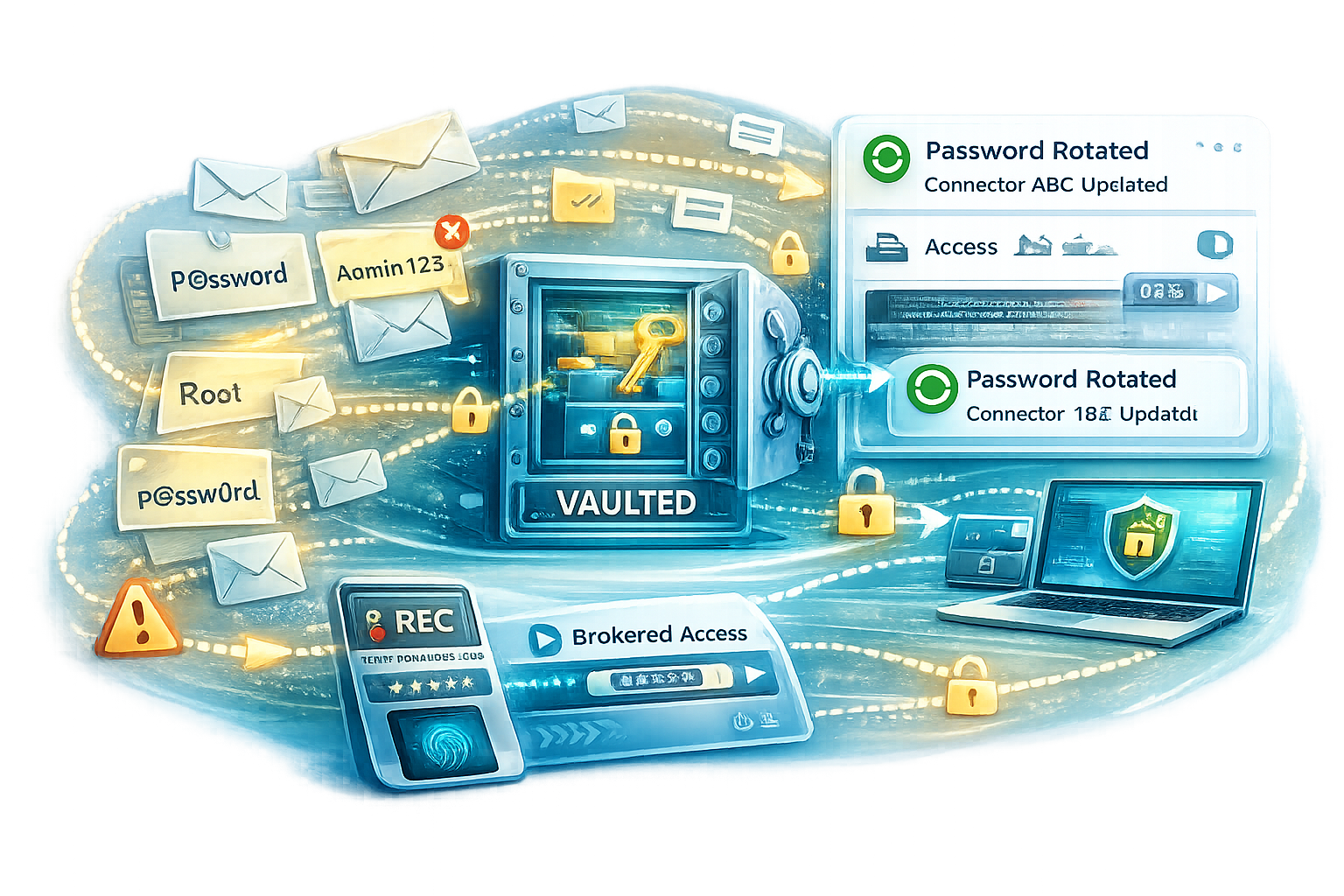
Vendor access often becomes risky because passwords and admin credentials get shared across tickets, emails, and teams, then remain valid long after the work is done. This capability removes that practice by introducing controlled credential handling, including vaulting and rotation where needed, and brokered access methods that avoid exposing privileged secrets to vendors.
The result is a major reduction in credential leakage risk and “unknown reuse.” It also limits the blast radius of compromise, supports cleaner operations during incidents, and improves confidence that vendors cannot keep using privileged credentials outside approved work windows.
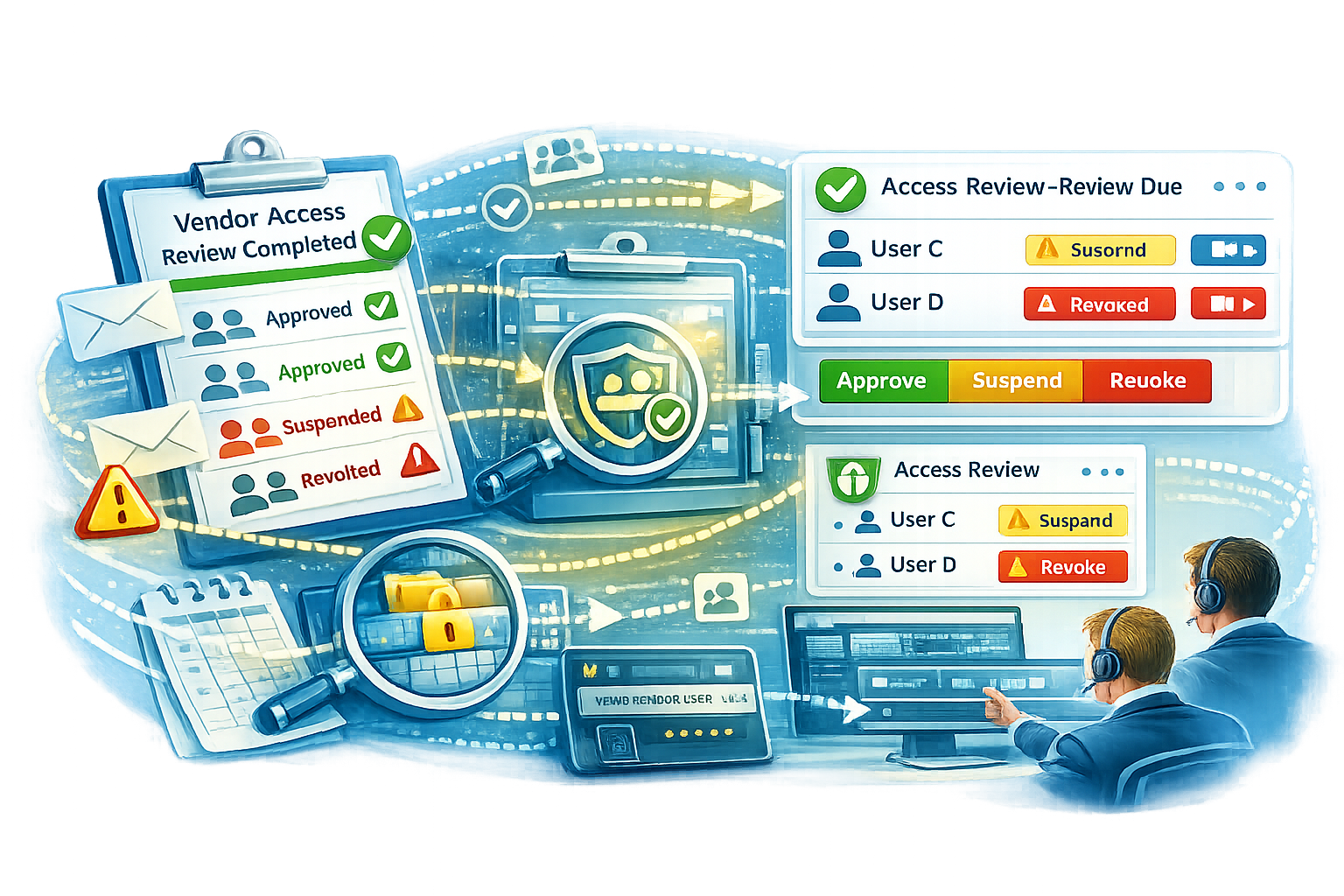
Third-party access changes constantly with contracts, projects, and support relationships. This capability keeps vendor access accurate over time through lifecycle controls such as onboarding rules, suspension and offboarding, periodic access reviews, and clear ownership for who validates vendor access to specific systems.
This prevents access drift, reduces orphaned vendor accounts, and improves audit readiness because access remains explainable and provable. It also reduces operational friction by making vendor access maintenance predictable rather than reactive.
Third-party access is often where auditors ask the hardest questions because it crosses organizational boundaries. This capability brings vendor access evidence into one place across requests, approvals, time windows, credential use, and session activity, so privileged vendor work becomes traceable and provable against audit and regulatory expectations.
The outcome is faster audits and fewer findings because evidence is complete and consistent. It also strengthens investigations by making it easy to explain who accessed what, when, why it was approved, and what actions were performed.
Vendor access changes with contracts, projects, and support needs, and controls drift when ownership is unclear. This capability defines how third-party privileged access is run day to day including ownership, onboarding and offboarding workflows, access change handling, monitoring, and escalation so access remains controlled as vendors and systems evolve.
This reduces operational friction and prevents “shadow” access paths from reappearing over time. It keeps third-party access sustainable at scale, with policies that remain consistent, visible, and enforceable long after go-live.
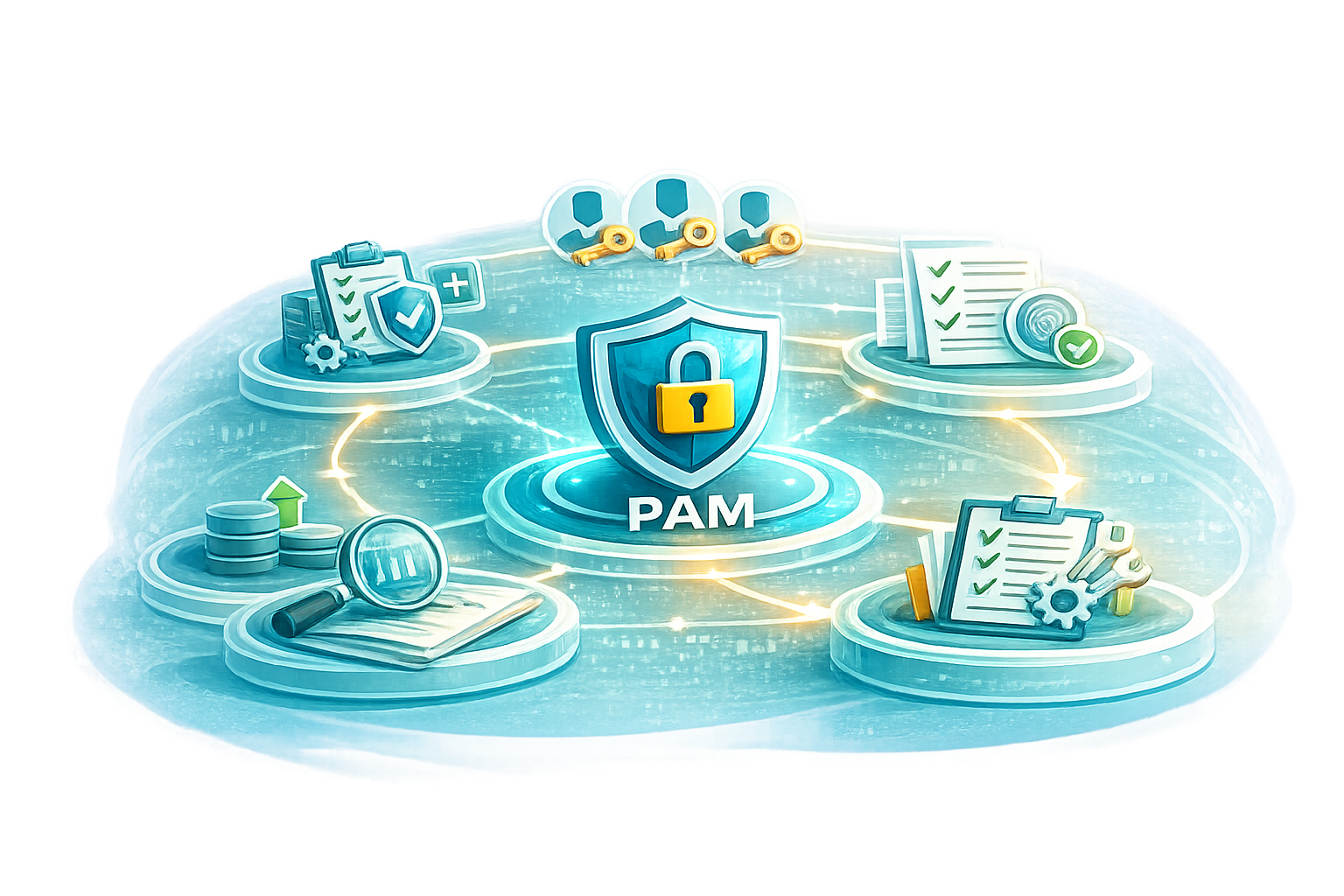
How We Deliver Successful Vendor Privileged Access Projects
Successful vendor access is fast for third parties and controlled for you. We focus on enabling support without credential sharing, keeping access within clear boundaries, and ensuring every session is traceable and defensible.

Stakeholder Discovery and Vendor Reality Check
We align security, IT operations, system owners, and procurement on how vendors actually access systems today, where friction exists, and which access paths create the highest risk.

Vendor Access Model and Policy Design
We define who can access what, under which conditions, and for how long. This includes approvals, time windows, MFA and step-up rules, emergency access handling, and accountability requirements.

Secure Access Architecture and Boundaries
We onboard priority vendors and systems first, replacing shared passwords and unmanaged VPN workflows. Access is made repeatable and easy to adopt, for both vendors and internal teams.

Vendor Onboarding and Migration
We onboard priority vendors and systems first, replacing shared passwords and unmanaged VPN workflows. Access is made repeatable and easy to adopt, for both vendors and internal teams.

Governance, Evidence, and Continuous Control
We establish reviews, reporting, monitoring, and operational workflows so vendor access stays accurate as contracts, projects, and systems change, and remains audit-ready over time.
Third-Party and Vendor Privileged Access
Platforms We Deliver
One Identity Safeguard Remote Access enables VPN-free, Zero Trust remote access to privileged systems through a secure, browser-based experience. It supports RDP and SSH connections, helps simplify third-party access, and improves auditability when combined with session oversight and recording.
Continue reading

SSH PrivX enables just-in-time privileged access with strong traceability and supports OT use cases and post-quantum readiness planning.
Continue reading
