Workforce Access Management
Workforce Access Management: secure, seamless access for your enterprise
Workforce Access Management secures how employees authenticate and access business applications. It combines Single Sign-On (SSO), federation, multi-factor authentication (MFA), and passwordless authentication to deliver consistent access across your application landscape.
That makes Workforce Access Management an essential part of any modern cybersecurity program. Done right, it reduces credential risk and improves audit readiness while keeping day-to-day access friction low for employees and contractors.
Clarify your workforce access needs in a short call. We will align on your scope, priorities, and the next best step.
Prefer to describe your scope first? Submit the following request and we will come back with next steps Tell us about your needs.
How We Help
Move workforce access from ad hoc logins to a consistent, secure experience. From SSO and MFA policy design to application onboarding and operational hardening, we help you deliver measurable progress fast, with less friction for employees and contractors.
We help you turn Workforce Access into an executable program, not a one-off SSO setup. Together, we define the right scope, target architecture, and sign-in principles, then build a phased rollout plan that prioritizes your most critical applications and reduces risk quickly.
Typical deliverables:
- Current-state review (applications, identity sources, protocols, MFA posture)
- Target architecture and sign-in principles (SSO, federation, session approach)
- Phased rollout roadmap and onboarding waves for applications
- Adoption approach and success metrics (security uplift, friction reduction, coverage)
We design secure and user-friendly authentication journeys for employees and contractors, including step-up authentication, conditional access patterns, and consistent policies across applications.
Typical deliverables:
- Authentication journey design (web and mobile where applicable)
- Policy baseline (MFA rules, step-up triggers, risk-based access patterns)
- Access policy documentation and governance alignment (RBAC where needed)
- Standard patterns for application teams to adopt
We establish a scalable “factory” to onboard applications efficiently, using reusable patterns and integrations so you can expand coverage quickly without reinventing the wheel each time.
Typical deliverables:
- Standard onboarding process, templates, and checklists
- SSO integrations (OIDC/SAML), claims mapping, session handling
- Reusable identity patterns and integration guidelines for app teams
- Accelerated onboarding waves for prioritized applications
We harden and operationalize your Workforce Access platform to keep it stable, secure, and continuously improving. This includes logging, monitoring, governance, and performance/security tuning.
Typical deliverables:
- Security hardening (configuration baseline, secure defaults, admin controls)
- Monitoring and logging setup (audit logs, sign-in reporting, alerting)
- Runbooks and operational procedures (incident, change, access reviews)
- Continuous optimization (policy tuning, UX friction reduction, coverage growth)
If you already know your scope and needs, send an inquiry and we will respond with next steps. If you prefer to talk first, book a short discovery call.

Workforce Outcomes You Can Measure
Workforce Access Management should reduce credential risk and manual effort while improving user productivity. With the right rollout approach, organizations typically see faster application onboarding, fewer helpdesk tickets, and stronger control over access to sensitive systems.
- Fewer password resets and access tickets through SSO and passwordless sign-in
- Higher security posture with MFA and step-up policies for sensitive applications
- Faster application onboarding using standardized integration patterns and governance
- Audit-ready visibility with consistent policies, logs, and sign-in reporting
Explore the outcomes we deliver through a structured workforce access approach.
Read more …
Workforce Access Management
What Workforce Access Delivers
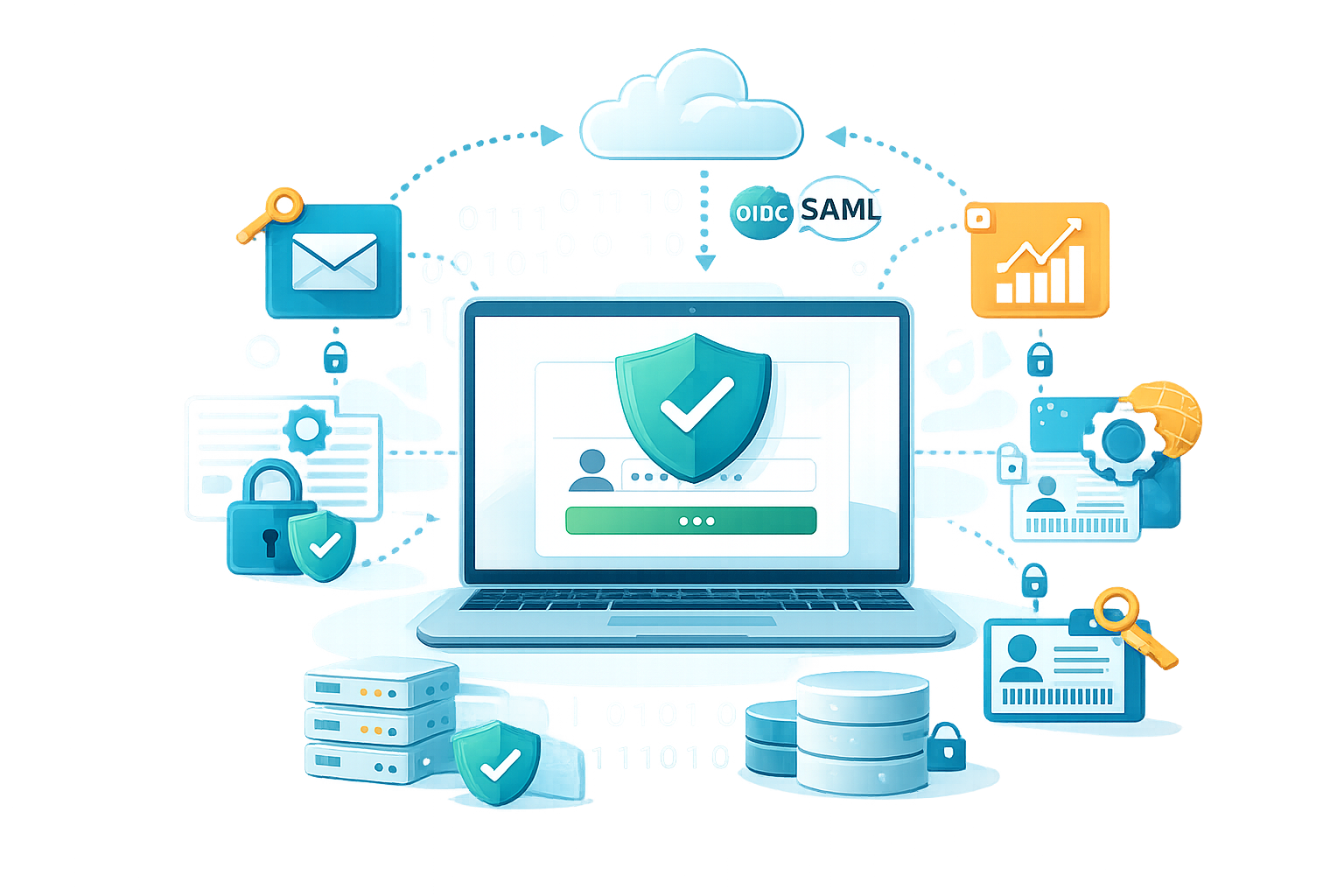
Enable seamless single sign-on across SaaS, on-prem, and custom applications using SAML and OIDC, so employees can access what they need without repeated logins. By centralizing authentication and login policies, you get a consistent experience across web and mobile while reducing password fatigue and support tickets.
This capability also helps you standardize application onboarding and federate access to a wide mix of enterprise apps, including legacy systems, while keeping security controls and authentication decisions in one place.
Move beyond basic MFA by adopting phishing-resistant methods and passwordless authentication where it makes sense, such as passkeys or FIDO2-based factors. With the right policies, you can prompt users only when needed through step-up authentication for sensitive apps and high-risk actions, keeping day-to-day access smooth while significantly reducing account takeover risk.
The result is stronger security aligned with Zero Trust principles, without turning login into a frustrating experience.

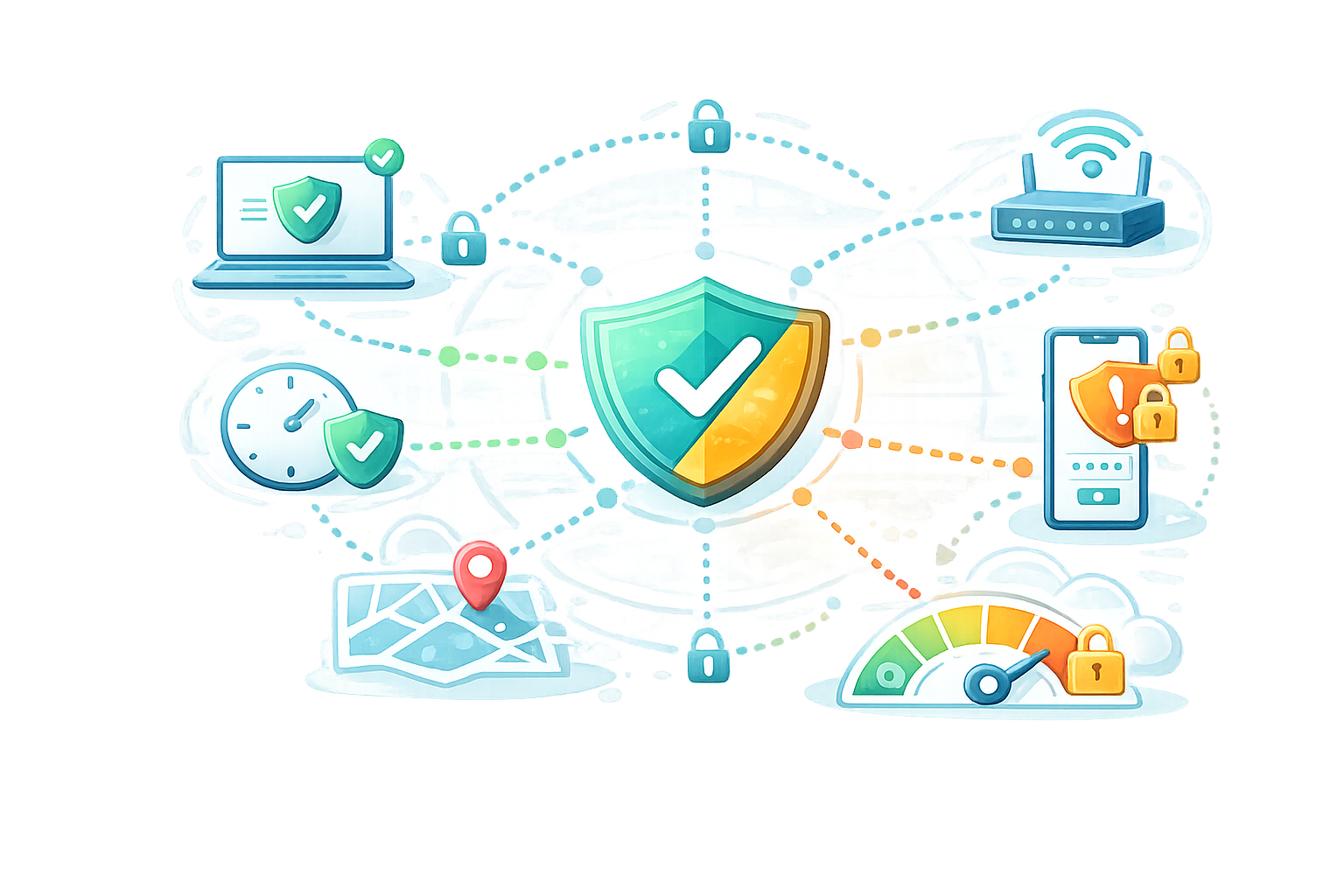
Modern workforce access cannot be “one rule for everyone” because risk changes constantly. With adaptive access, authentication decisions adjust in real time based on signals like user behavior, location anomalies, device trust, impossible travel, or unusual app usage.
This allows you to keep day-to-day access smooth for trusted scenarios, while automatically increasing assurance when risk increases. The result is fewer unnecessary MFA prompts, better protection against account takeover, and consistent enforcement of security policies across SaaS and internal applications. It also creates a practical balance between strong security and employee productivity.

Conditional access ensures that access is granted only when the full context matches your security requirements, not just when the password is correct. You can define rules based on factors like network zone (inside corporate vs external), device posture (managed vs unmanaged), user group, application sensitivity, and time of access.
This is especially powerful for protecting critical systems and privileged actions, where access should be restricted unless conditions are explicitly met. It also supports compliance by proving that controls are applied consistently, and that high-risk access is automatically blocked or stepped up. In practice, it becomes a central “policy engine” that standardizes access decisions across the enterprise.
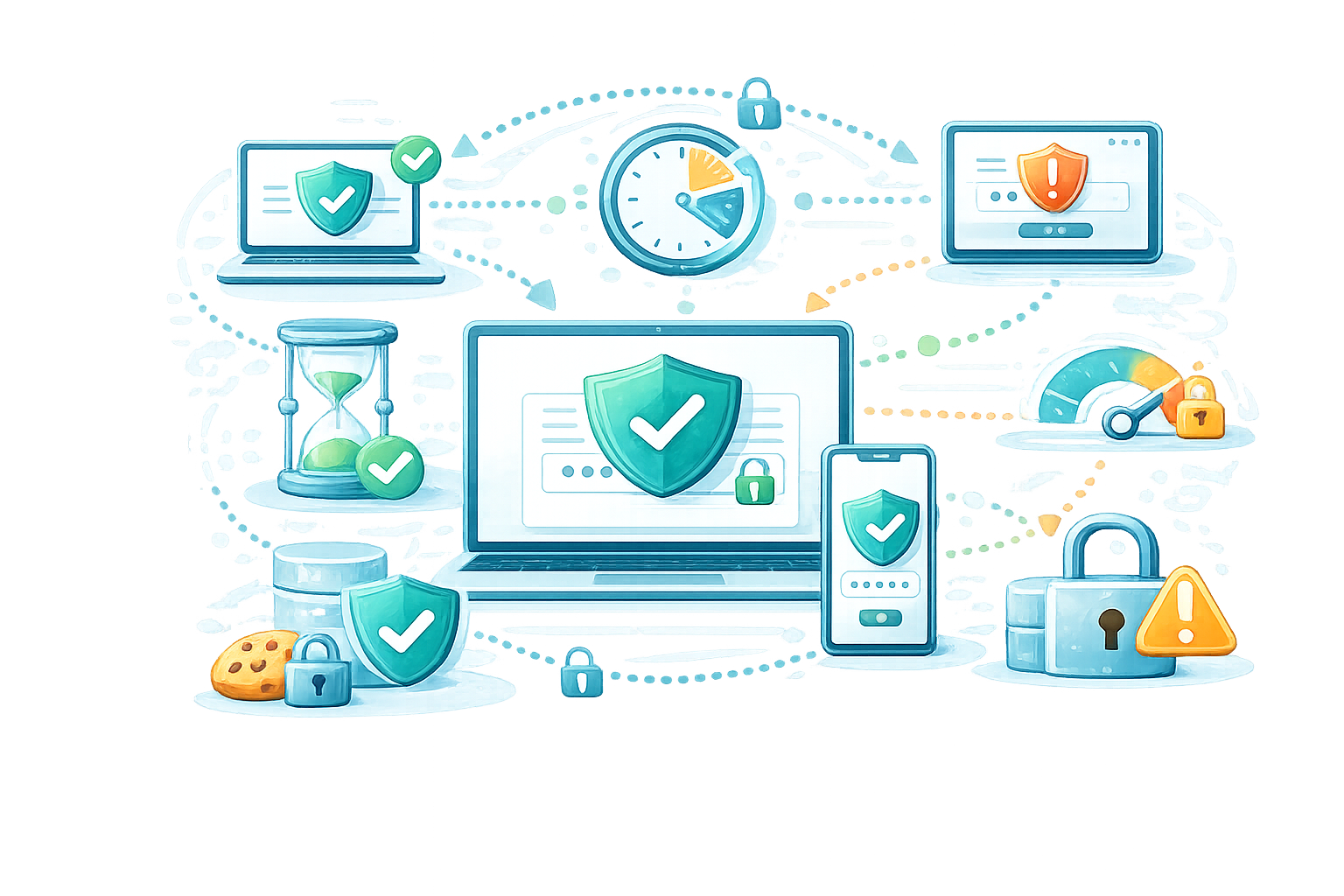
Once a user is authenticated, the real risk often shifts to what happens during the session. Secure Session Management focuses on keeping sessions under control across web and mobile, so access does not “linger” longer than it should. It covers things like smart session timeouts, re-authentication for sensitive actions, and consistent session policies across apps.
It also helps reduce exposure from stolen session cookies or unattended devices by enforcing stronger session lifecycle rules. The result is a smoother user experience for normal work, but with tighter control whenever risk increases.
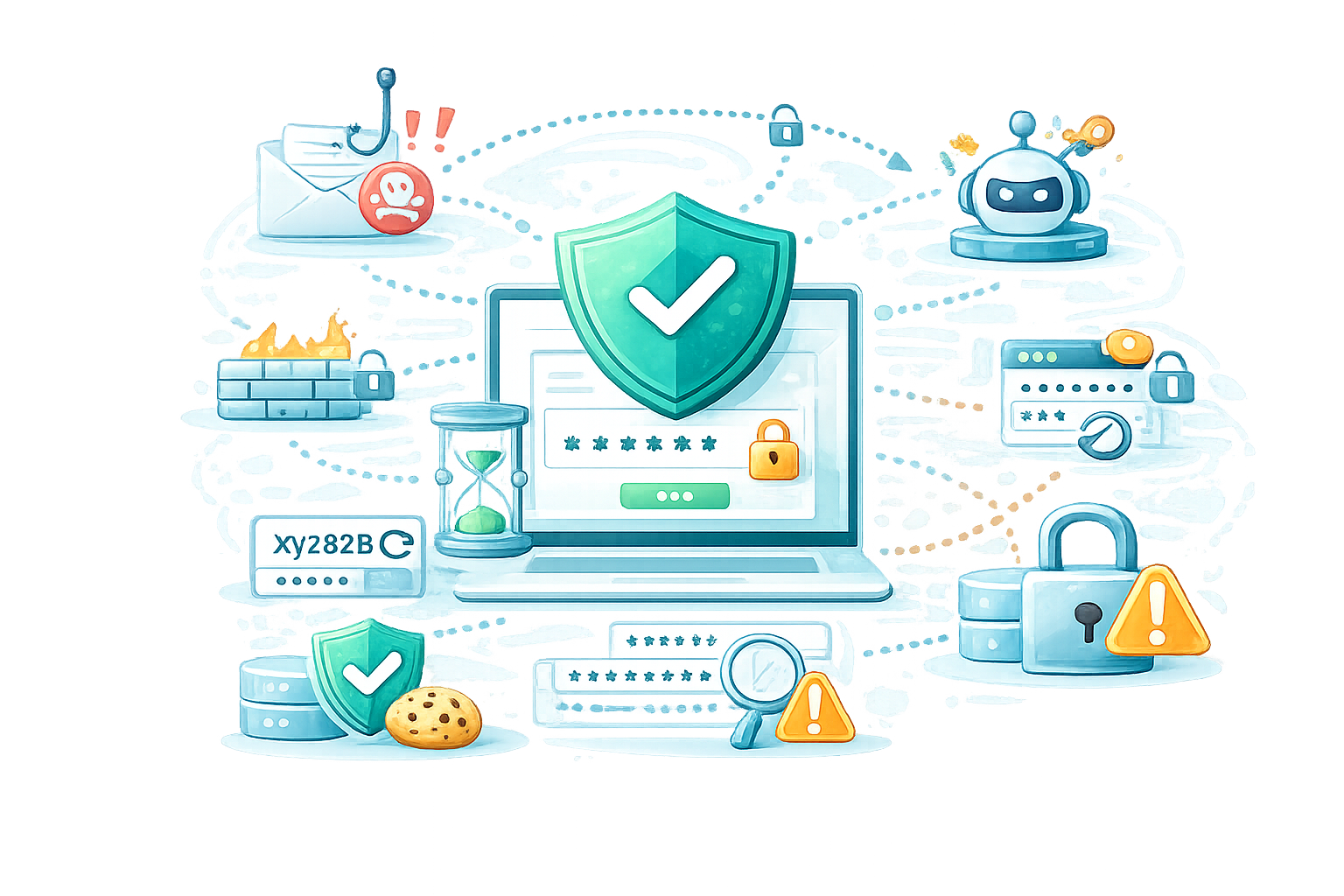
This capability is about hardening the entire login surface area, not only the password. It reduces the chance of credential stuffing, brute-force attempts, and automated bot logins by adding protective controls around the authentication flow. It also strengthens account recovery and lockout behavior so attackers cannot abuse “forgot password” as an entry point.
In practice, it improves login reliability for legitimate users while silently blocking suspicious traffic patterns. The outcome is fewer compromised accounts and fewer incidents caused by weak or reused credentials.
Modern workforce access is not only about “who can log in”, but also what they can do after login. Fine-grained authorization lets you enforce least privilege at application level using policies based on user role, group, attributes, device posture, location, and risk signals.
This enables consistent access decisions across web apps, APIs, and internal tools, and reduces the need for hard-coded permissions inside each application. With centralized policy management and clear decision logic, teams can scale access rules safely while keeping them auditable and maintainable, even as applications and roles change.

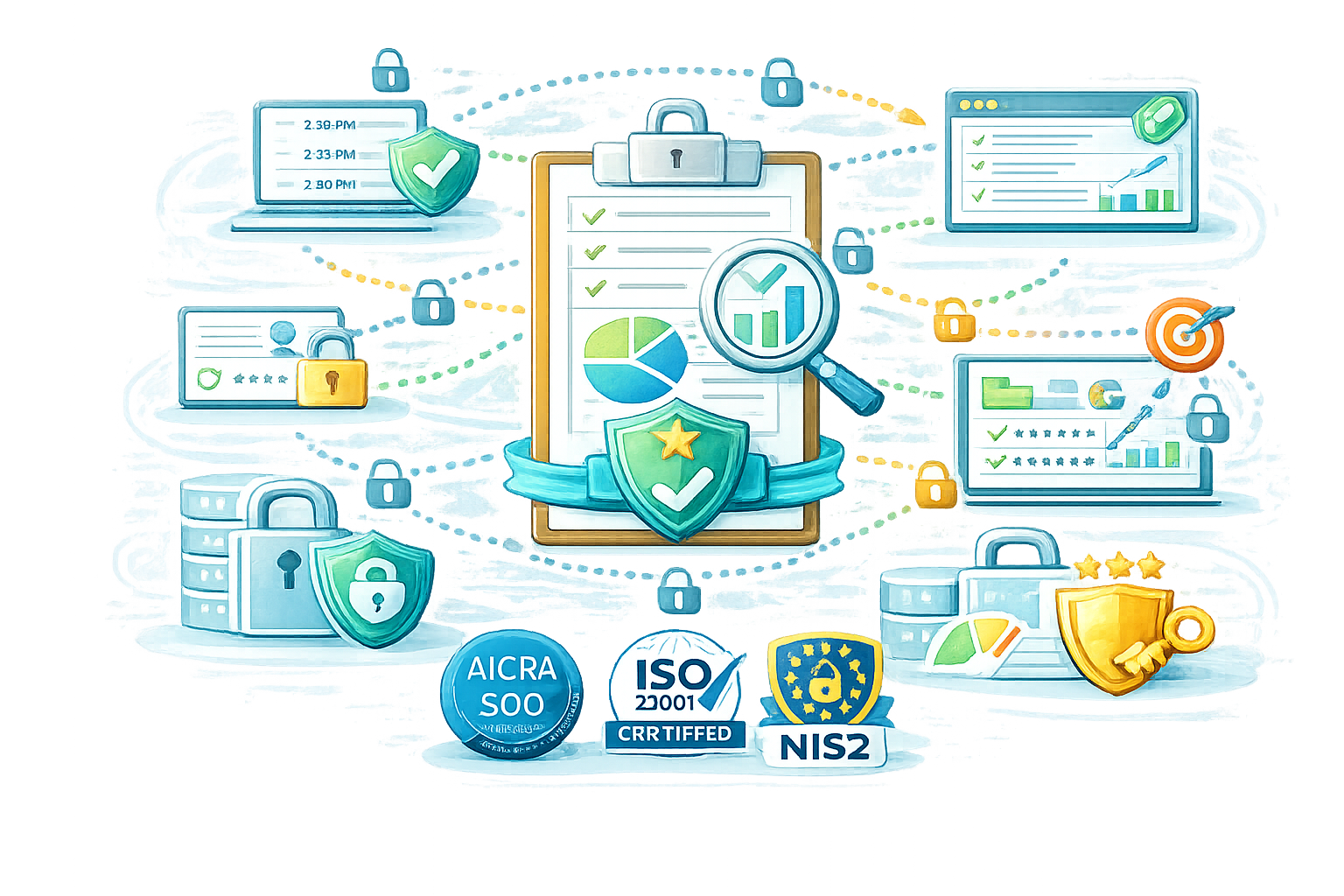
Workforce access programs must be provable, not just implemented. This capability focuses on creating audit-ready evidence for authentication events, MFA challenges, policy decisions, privileged access, and access changes. By centralizing logs, reporting, and traceability across applications, you can answer questions like “who accessed what, when, from where, and under which policy decision” without manual effort.
This supports ongoing security operations and compliance requirements such as ISO 27001, SOC 2, GDPR (accountability and security of processing), and often sector expectations aligned with NIS2 and internal governance rules. The goal is simple: faster audits, fewer findings, and stronger operational visibility.
How We Deliver Successful Workforce Access Programs
We deliver Workforce Access Management as a program, not a one-time SSO rollout. Our approach combines a clear access strategy, practical policy design (MFA, step-up, passwordless), and a scalable onboarding factory to expand coverage across applications. We then stabilize and optimize operations with monitoring, runbooks, and continuous improvement so security stays strong and user friction stays low.

Outcome-driven delivery
We focus on measurable outcomes: reduced credential risk, faster access, and scalable application coverage with less friction.
Reusable methods and patterns
We apply proven patterns for SSO integrations, claims mapping, session handling, and MFA step-up to accelerate delivery and reduce complexity.

Scalable application onboarding
We onboard applications in waves using an onboarding “factory” approach: intake, testing, cutover, and documentation to scale safely.
Security policy design that users adopt
We design MFA, Conditional Access, and passwordless rollout in a way that strengthens security without breaking productivity.
Operational readiness and stability
We deliver runbooks, monitoring and troubleshooting practices so your access platform remains reliable, supportable, and audit-ready.
Continuous optimization
After go-live, we tune policies, improve user journeys, and expand coverage based on data, adoption feedback, and risk priorities.
Workforce Access Management
Platforms We Deliver

Gluu Flex is a self-hosted enterprise IAM platform with an open source core (Janssen) and an enterprise control plane, supporting SSO, SAML/OIDC federation, MFA/passwordless, and Open Banking use cases.
Continue reading
WSO2 Identity Server supports workforce SSO and CIAM by enabling federation (SAML/OIDC), MFA, adaptive authentication, and secure customer sign-up and login journeys.
Continue reading

Microsoft Entra ID (Azure AD) secures workforce access with SSO, Conditional Access, and strong authentication. It also supports identity governance through Entra capabilities like lifecycle workflows, access reviews, and entitlement management.
Continue reading

Keycloak is an open source IAM platform for workforce and CIAM, enabling SSO, OIDC/OAuth/SAML federation, identity brokering, and LDAP/AD user federation.
Continue reading
